


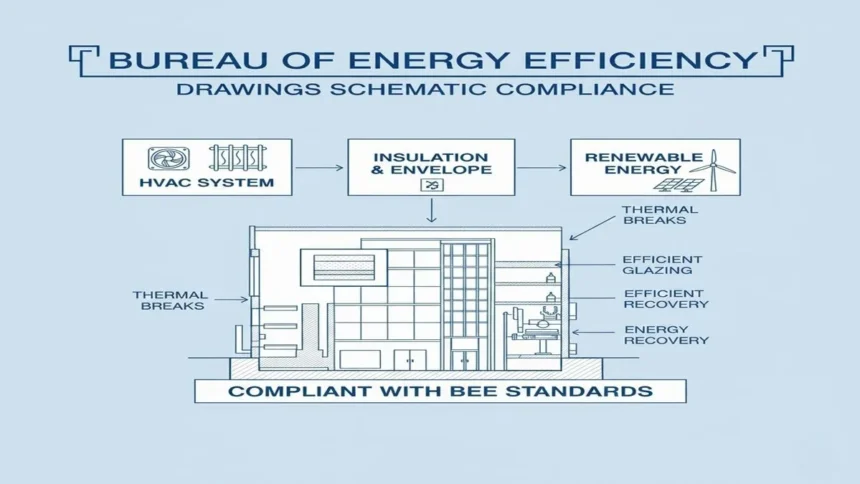
Energy efficiency is a critical focus for sustainable development, and India has taken significant steps to promote it through the Bureau of Energy Efficiency (BEE), under the Ministry of Power. A BEE drawing is a technical or schematic illustration that demonstrates compliance with BEE standards. Widely used in buildings, industries, and product designs, these drawings provide precise guidance for implementing energy-saving measures while ensuring regulatory adherence and operational efficiency.
- What is a BEE Drawing?
- Importance of the Bureau of Energy Efficiency Drawings
- Components of a Bureau of Energy Efficiency Drawings
- Applications of the Bureau of Energy Efficiency Drawings
- Standards and Guidelines for BEE Drawings
- Digital Tools for Bureau of Energy Efficiency Drawings
- Challenges and Considerations
- FAQs
- Final Thought
What is a BEE Drawing?
A Bureau of Energy Efficiency Drawings refers to a technical or schematic representation created in accordance with the guidelines prescribed by the Bureau of Energy Efficiency. These drawings are used to illustrate energy-saving measures, equipment specifications, system layouts, and operational parameters in buildings, industrial setups, and product designs.
- Compliance Demonstration: It visually communicates that a building, product, or system adheres to BEE’s energy efficiency standards.
- Technical Clarity: It provides a detailed schematic to engineers, designers, auditors, and regulatory authorities, facilitating proper evaluation and implementation of energy-efficient measures.
In essence, a BEE drawing is both a regulatory tool and a technical guide.
Importance of the Bureau of Energy Efficiency Drawings
The significance Bureau of Energy Efficiency Drawings extends beyond regulatory compliance. They are essential tools for planning, analysis, and decision-making in energy management. Some of the key benefits include:
- Regulatory Compliance: India’s Energy Conservation Act, 2001, mandates adherence to energy efficiency standards in buildings, industrial processes, and certain products. BEE drawings serve as official documentation demonstrating compliance with these standards, which is crucial for obtaining certifications and approvals.
- Optimization of Energy Use: Detailed schematics allow designers and engineers to identify potential areas of energy waste. For instance, a lighting layout drawing can highlight zones where energy-efficient lighting can replace conventional fixtures, resulting in reduced energy consumption.
- Facilitating Audits and Certification: Energy auditors rely heavily on BEE drawings to evaluate the energy performance of a building or industrial process. These drawings provide a visual representation of energy systems, equipment specifications, and operational flows, simplifying the audit process.
Components of a Bureau of Energy Efficiency Drawings
A high-quality BEE drawing is a comprehensive representation of systems designed for energy efficiency. While the specific components may vary depending on the application, some common elements include:
1. System Layouts
Diagrams detailing the spatial arrangement of equipment, lighting, heating, ventilation, and air conditioning (HVAC) systems. For industrial settings, this could include motor-driven machinery, process flows, and energy recovery systems.
2. Equipment Specifications
Each component in a BEE drawing must include relevant technical specifications such as rated power, efficiency rating, operational parameters, and manufacturer details.
3. Energy Flow Representation
Illustrations of how energy flows through the system, electrical, thermal, or mechanical, highlighting points of consumption, loss, or recovery.
4. Compliance Markings
Indicators showing adherence to specific BEE standards, such as star ratings for appliances or energy efficiency indexes for industrial equipment.
Applications of the Bureau of Energy Efficiency Drawings
Bureau of Energy Efficiency drawings are widely used across multiple sectors for energy compliance and sustainable design:
- Building Design: Illustrates energy-efficient lighting, HVAC systems, and insulation standards.
- Industrial Projects: Depicts machinery layouts and energy-saving measures in manufacturing units.
- Product Design: Ensures appliances and equipment meet BEE star rating norms.
- Renewable Energy Systems: Guides solar, wind, and hybrid energy integration projects.
These applications ensure projects are not only regulatory-compliant but also cost-efficient and environmentally responsible.
Standards and Guidelines for BEE Drawings
Creating a Bureau of Energy Efficiency Drawing requires strict adherence to standards set by the Bureau of Energy Efficiency. These guidelines ensure uniformity, clarity, and accuracy across projects. Key aspects include:
- Drawing Scale and Dimensions: Must accurately represent real-world systems and components.
- Labeling Requirements: Properly annotate components for easy understanding.
- Energy Efficiency Compliance Indicators: Include star ratings, energy consumption, and efficiency metrics.
Following these standards ensures that projects are transparent, verifiable, and ready for regulatory inspection.
Digital Tools for Bureau of Energy Efficiency Drawings
Modern Bureau of Energy Efficiency drawings are predominantly created using advanced computer-aided design (CAD) and building information modeling (BIM) software. These tools allow precise technical schematics, 3D visualization, and automated compliance checks. Key advantages of using digital tools include:
- Faster drafting with accurate dimensions and scales.
- Easier incorporation of BEE symbols and annotations.
- Enhanced visualization of energy flow and system layouts.
Digital adoption ensures efficiency, accuracy, and easier regulatory compliance verification.
Challenges and Considerations
While BEE drawings are invaluable, creating them comes with challenges:
- Complex Standards: Keeping up with evolving BEE guidelines can be difficult.
- Technical Accuracy: Errors in specifications or symbols can lead to non-compliance.
- Integration with Design: Harmonizing energy efficiency requirements with aesthetic and functional design can be challenging.
- Documentation Maintenance: Maintaining up-to-date records for audits and certifications is essential.
Addressing these challenges ensures that the drawings serve their purpose effectively and avoid compliance risks.
FAQs
1. Who is responsible for creating BEE drawings?
Typically, architects, energy auditors, mechanical and electrical engineers, or certified energy consultants create BEE drawings in accordance with BEE standards.
2. Are BEE drawings mandatory for all buildings and industries?
Bureau of Energy Efficiency drawings are mandatory for projects falling under the Energy Conservation Act, 2001, particularly large commercial buildings, energy-intensive industries, and appliances covered by the BEE labeling program.
3. What software is commonly used for BEE drawings?
AutoCAD, Revit (BIM), and specialized energy modeling tools like eQUEST, EnergyPlus, or Trace 700 are commonly used.
Final Thought
Bureau of Energy Efficiency drawings are more than technical illustrations; they are vital instruments for promoting energy efficiency, sustainability, and regulatory compliance. By accurately representing energy systems, equipment specifications, and operational flows, these drawings help architects, engineers, and industries optimize energy use, reduce costs, and achieve green certifications. Adhering to BEE standards ensures not only compliance but also contributes to India’s broader goals of energy conservation and environmental responsibility.