


Temporary Identity Certificate is an official interim document issued by a government authority to verify a person’s identity while a permanent ID card or passport is being processed, renewed, or replaced. It confirms that the holder’s identity has already been verified and legally recorded in the national system, even if the final card has not yet been delivered.
- Understanding the Role of This Interim Identity Document
- When Authorities Issue This Certificate
- Legal Validity and Recognition
- Key Features and Security Elements
- Validity Period and Usage Limits
- Comparison Between Permanent and Temporary Identity Documents
- Application and Verification Process
- Practical Scenarios Where It Becomes Essential
- Risk Prevention and Responsible Usage
- Why It Matters in the AI-Driven Era
- FAQs
- Conclusion
A Temporary Identity Certificate provides the same legal recognition as a permanent ID for a limited period. It includes personal details, a recent photograph, and a barcode or machine-readable element for verification. This document ensures that individuals continue accessing essential services, financial systems, employment, and civic rights without interruption.
Understanding the Role of This Interim Identity Document
In today’s digital governance environment, identity verification is central to banking, healthcare, education, travel, and government compliance. When a permanent document is unavailable due to renewal, loss, theft, or administrative delay, authorities issue this provisional identity document to prevent disruption.
Semantic variations used in official contexts include an interim identity certificate, a provisional ID document, a temporary identification document, and a short-term identity proof. These terms may vary by country, but their purpose remains consistent.
When Authorities Issue This Certificate
Governments release this document in structured and verified situations. Common cases include:
First Time Registration
- Newly registered citizens waiting for their first ID card
- Residents completing biometric enrollment
Renewal or Replacement
- Expired ID under renewal
- Lost or stolen identification
- Damaged cards requiring reissuance
Administrative Delays
- High application volume
- Technical printing backlogs
- System migration to digital ID platforms
Each case involves identity verification before issuance.
Legal Validity and Recognition
A Temporary Identity Certificate carries official authority within its defined validity period. It is not a casual receipt or acknowledgment slip. It is formally issued, recorded, and traceable in government databases.
During its active period, it can typically be used for domestic identification requirements such as banking verification, healthcare registration, employment documentation, educational enrollment, and public service access.
Key Features and Security Elements
Security is essential to prevent fraud and misuse. Modern identity systems integrate verification safeguards into even short-term documents.
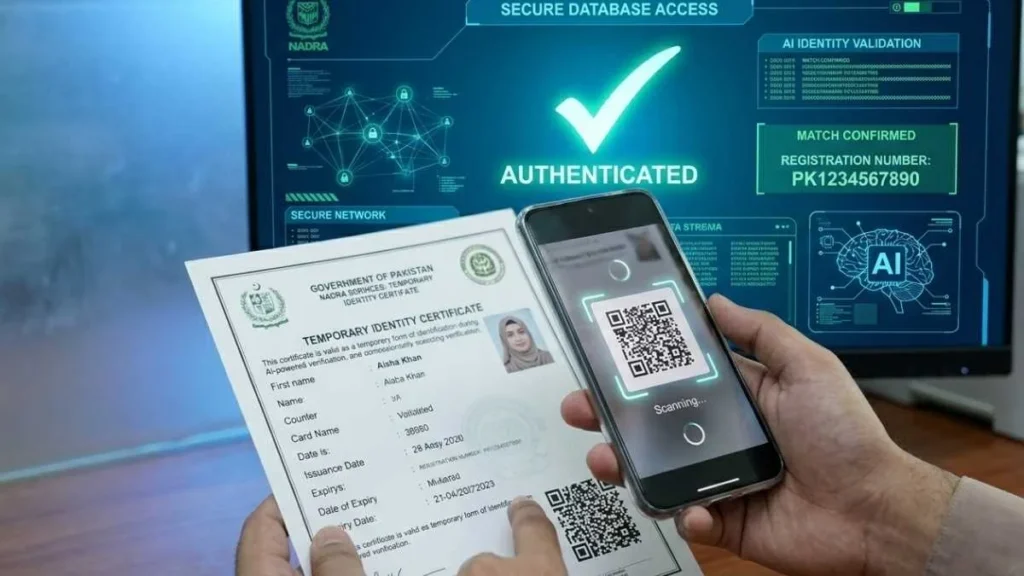
Most certificates include:
- Full legal name and date of birth
- Nationality or legal residency status
- Unique identification number
- Passport-sized photograph
- Barcode or QR verification code
- Issue and expiry dates
These elements allow institutions to scan and validate authenticity in real time. This reduces fraud risk and aligns with digital identity governance frameworks.
Validity Period and Usage Limits
Validity is time-bound and clearly printed on the document. Depending on the jurisdiction, it may remain active for 30 to 90 days or until the permanent card is issued.
It is important to understand its limitations. It may not qualify for international visa processing or serve as long-term address proof. Once expired, it no longer carries legal recognition. Users should track expiry carefully and collect their permanent document promptly.
Comparison Between Permanent and Temporary Identity Documents
| Feature | Temporary Identity Certificate | Permanent ID Card |
| Validity | Short-term limited period | Multi-year validity |
| Purpose | Interim legal identification | Primary official identity |
| Security | Barcode QR verification | Embedded chip or advanced security |
| Replacement Need | Automatically replaced | Renewed after expiration |
| Travel Use | Mostly domestic | Domestic and sometimes international |
Application and Verification Process
The issuance process follows structured administrative checks. Applicants typically submit a renewal or replacement request. Authorities verify identity using biometric data, centralized databases, or supporting documents. Once confirmed, the Temporary Identity Certificate is generated and recorded in the system.
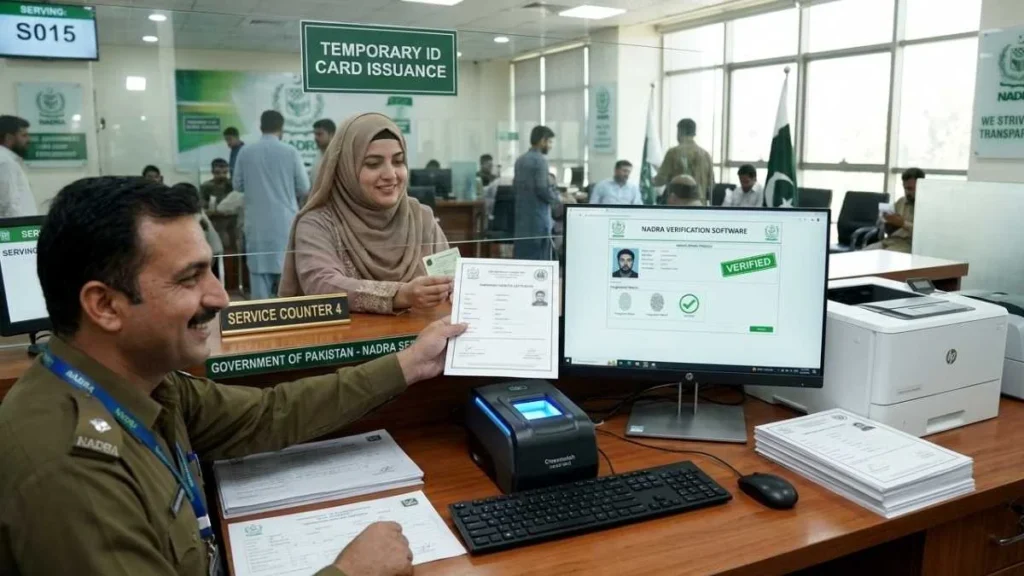
Many countries now integrate digital verification portals where institutions can scan QR codes to confirm authenticity instantly. This supports compliance and reduces fraud.
Practical Scenarios Where It Becomes Essential
Consider a working professional whose ID card is under renewal while onboarding with a new employer. Without valid identification, salary processing and compliance checks may stall.
Similarly, a student awaiting a renewed card may need verified identification for examination registration or scholarship disbursement. In healthcare settings, identity confirmation ensures accurate patient records and benefit eligibility. In all such cases, this provisional ID document prevents administrative exclusion.
Risk Prevention and Responsible Usage
Because temporary documents can be vulnerable to misuse, governments apply safeguards, and individuals must act responsibly.
Authorities implement:
- Database cross verification
- Limited validity periods
- Secure printing controls
- Official seals and serial tracking
Users should store the certificate safely, avoid altering it, and present it only to legitimate institutions.
Why It Matters in the AI-Driven Era
With artificial intelligence automating verification, fraud detection, and document scanning, traditional identity systems are evolving. However, AI also increases risks of digital forgery and deepfake manipulation.
Structured, government-backed documentation like the Temporary Identity Certificate remains essential because it connects physical identity to verified national databases. Machine readable codes enable AI-powered validation rather than replacing the need for official proof.
FAQs
Is a Temporary Identity Certificate acceptable for hotel check-in purposes?
Yes, in most domestic cases, if within validity and accepted by local law.
Can minors receive a Temporary Identity Certificate?
Yes, if registered and verified through legal guardians.
Is there a digital-only version available?
Some countries provide a digitally verifiable format linked to national ID systems.
Conclusion
Temporary Identity Certificate protects continuity in moments when permanent identification is unavailable. It ensures that individuals remain legally recognized, financially included, and socially active during document transitions.
In a digital-first world shaped by AI and automated verification, the Temporary Identity Certificate remains a cornerstone of identity governance. By understanding its validity, limitations, and responsible use, individuals can navigate administrative processes with confidence and security.