


Natalie Harp is an American political aide, conservative commentator, and cancer survivor known for her close professional association with Donald Trump. Natalie Harp gained national attention after sharing her personal health journey at a major conservative conference, later becoming part of a high-visibility political communications team.
- Early Life, Education, and Formative Years
- Health Journey and National Recognition
- Entry Into National Politics
- Professional Role and Responsibilities
- Political Alignment and Public Image
- Understanding the Right to Try Context
- Timeline of Key Milestones
- Influence in Post-Presidency Operations
- Broader Trends in Modern Political Messaging
- FAQs
- Conclusion
Natalie Harp is widely recognized for blending personal experience with public policy advocacy. Over time, she transitioned from being a speaker and supporter to serving in trusted advisory and media monitoring roles. Her rise reflects the growing importance of narrative storytelling, digital messaging, and loyalty-driven strategy in modern American politics.
Early Life, Education, and Formative Years
Born in 1991 in the United States, Natalie Harp pursued higher education at Liberty University. The institution is known for its strong Christian foundation and engagement in political and civic discussions.
Her academic years shaped her communication skills and public speaking confidence. Although detailed records of her major are limited, it is clear that her education provided a base for her later involvement in political advocacy. During this time, she developed a growing interest in conservative media spaces and national policy debates.
Health Journey and National Recognition
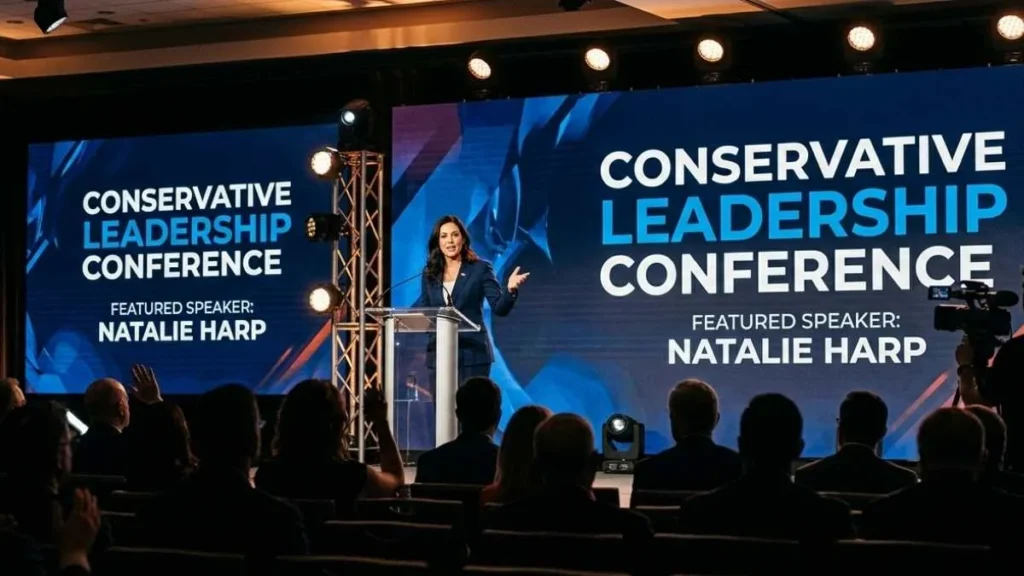
At the 2019 Conservative Political Action Conference, she delivered an emotional speech describing her treatment experience. She connected her recovery to the federal Right to Try Act signed into law during the Trump administration.
Her testimony attracted national media attention. The speech positioned her not only as a survivor but as a compelling storyteller capable of connecting healthcare policy with real-life experience. This moment marked a turning point in Natalie Harp’s public profile and expanded her reach within conservative political networks.
Entry Into National Politics
Following her conference appearance, Natalie Harp began working more closely within political communications circles aligned with Donald Trump. She joined administrative operations connected to the White House and later participated in campaign-related efforts.
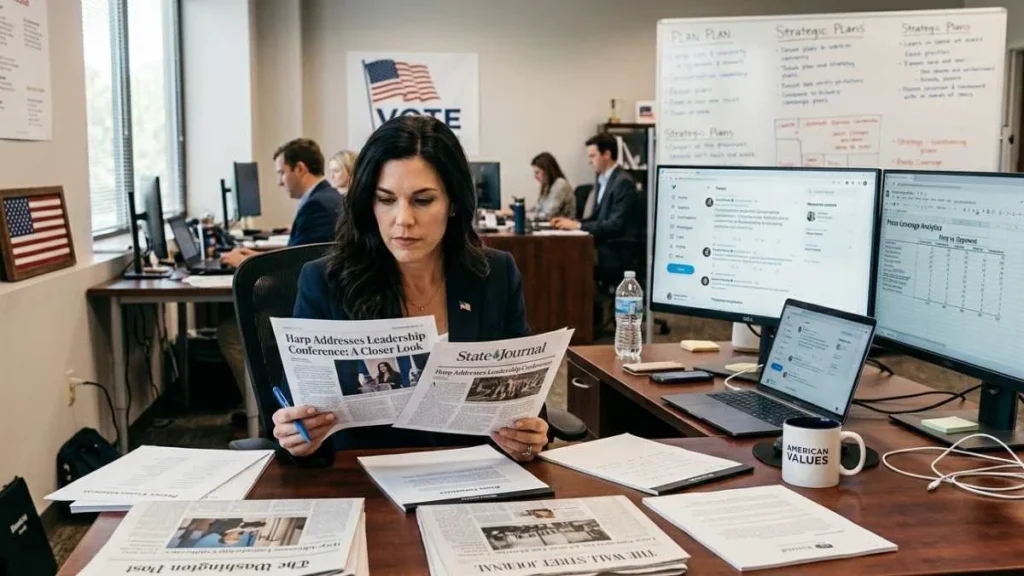
Her responsibilities reportedly included tracking media coverage, compiling printed news summaries, and assisting with message coordination. In a fast-moving political environment, such roles require discipline, discretion, and constant awareness of shifting narratives.
Professional Role and Responsibilities
Natalie Harp’s work has centered around strategic media management. Her responsibilities can be summarized in three primary areas:
Media Monitoring and Content Curation
She reportedly gathered news articles, television transcripts, and online coverage relevant to political messaging.
Communications Coordination
Her role included organizing briefing materials and ensuring leadership remained updated on daily media developments.
Campaign Support Functions
During active campaign periods, she assisted in information flow and public event preparation.
These tasks may appear operational, yet they are critical in shaping public narratives. In the digital era, information moves rapidly, and accurate summaries help political leaders respond effectively.
Political Alignment and Public Image
Natalie Harp is closely associated with Donald Trump’s political movement. Her loyalty has been publicly acknowledged in interviews and media reports. Supporters view her as dedicated and deeply grateful for policy decisions she believes helped her medical journey.
Critics, however, question the blending of personal narrative with partisan advocacy. This divide reflects broader political polarization in the United States.
Understanding the Right to Try Context
The Right to Try Act became a central theme in Natalie Harp’s story. The law allows terminally ill patients to seek access to certain experimental treatments not yet fully approved by regulators.
From a communications standpoint, her testimony illustrated how individual experience can humanize legislation. Public policy often feels distant to voters, but personal stories make it relatable.
Timeline of Key Milestones
| Year | Event | Significance |
| 2019 | CPAC speech | National recognition for health advocacy |
| 2019 | Joined Trump operations | Entry into federal-level communications |
| 2020 | Campaign involvement | Expanded political responsibilities |
| 2021 onward | Continued advisory role | Ongoing presence in political strategy |
Influence in Post-Presidency Operations
After Donald Trump left office in 2021, Natalie Harp remained active within his political circle. She reportedly continued overseeing media tracking and briefing preparation during a period marked by legal challenges and campaign positioning.
Political communication in post-presidency phases requires careful narrative control. Public figures face intense scrutiny, making strategic information filtering essential.
Broader Trends in Modern Political Messaging
Her career reflects several larger shifts in political communication:
- Personal storytelling as persuasion
- Direct engagement with digital audiences
- Rapid response information management
- Loyalty-centered advisory structures
These patterns are increasingly common in contemporary campaigns. Natalie Harp’s path mirrors the transformation of political operations into data-driven and media-focused systems.
FAQs
1. Did Natalie Harp have prior media experience before politics?
Yes, she contributed to conservative media spaces before entering formal political roles.
2. Is Natalie Harp an elected official?
No, she serves in advisory and communications capacities rather than holding public office.
3. What conference increased her national visibility?
Her 2019 speech at CPAC significantly expanded public awareness of her story.
Conclusion
Natalie Harp represents a modern blend of personal narrative and political strategy. From surviving cancer to serving as a trusted communications aide, her journey reflects determination, loyalty, and adaptability.
As political landscapes continue to evolve, figures like Natalie Harp demonstrate how storytelling, media awareness, and strategic positioning influence public discourse. Whether viewed as an advocate, aide, or symbol of a broader movement, her role remains significant within contemporary American politics.