


“G+ Unbanned” term often generates confusion because it sounds like it might be connected to Google services or even the discontinued Google+ social network. In reality, G+ Unbanned has little to do with either.
The phrase is typically used to describe websites, browser-based portals, proxies, or extensions that allow users to access online games on networks where gaming websites are normally blocked. These platforms have become particularly popular among students looking for entertainment during breaks or free periods.
Understanding what G+ Unbanned actually means, and the risks associated with it, can help users make informed decisions rather than relying on internet rumors or misleading claims.
What Does G+ Unbanned Mean?
In most cases, “G+ Unbanned” refers to a gaming portal designed to bypass network restrictions.
Schools, universities, libraries, and workplaces frequently use filtering systems that block access to gaming websites. Developers of unblocked gaming sites respond by creating alternative domains, mirror sites, web proxies, or browser-based game hubs that remain accessible despite those restrictions.
Importantly, there is no official technology product called “G+ Unbanned” owned or operated by Google.
Why Are Unblocked Gaming Sites So Popular?
The popularity of these platforms comes down to convenience. Unlike traditional PC games that require installation, browser games can run instantly from a web page. Students often prefer them because:
- No downloads are required
- Many games load quickly on school-issued devices
- They work on low-powered computers
- Progress can often be saved in the browser
- Thousands of games are available for free
A student with a Chromebook, for example, may not be allowed to install software but can still access browser-based puzzle games, racing games, strategy titles, or arcade classics through a web portal.
How Do G+ Unbanned Sites Work?
While implementation varies, most platforms rely on one or more of the following methods. Some sites route traffic through intermediary servers, making it harder for network filters to identify blocked destinations. When one domain becomes blocked, operators create a nearly identical version under a different web address.
Many portals host games directly on their own servers, reducing dependence on external gaming websites. Some platforms package browser games into simplified interfaces designed to function within restricted environments.
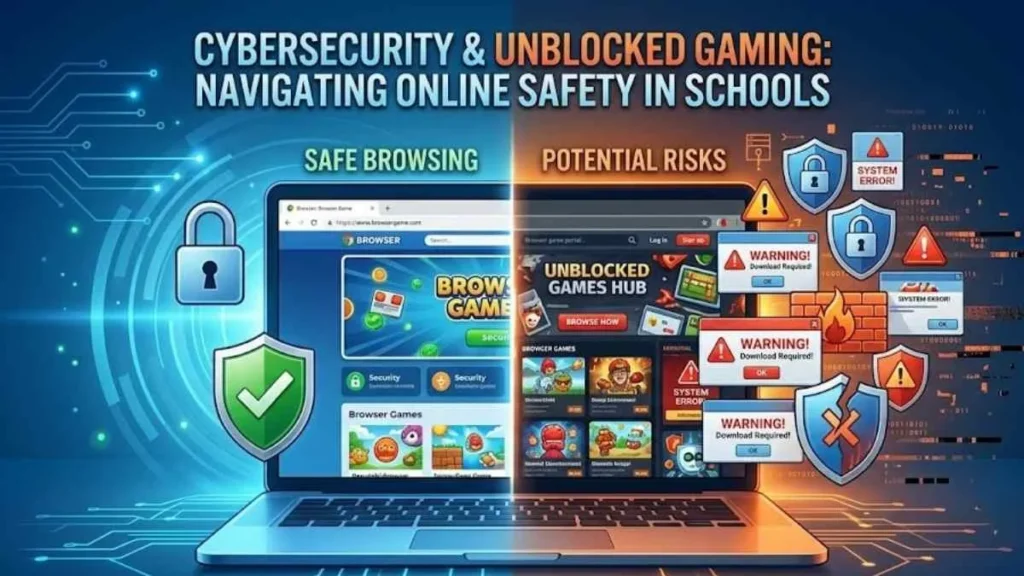
The Risks Users Often Overlook
Many discussions about unblocked gaming focus solely on access, but security is often ignored.
Privacy Concerns
Some sites collect browsing data, device information, or user behavior metrics without clearly explaining how the information is used.
Excessive Advertising
Many free gaming portals rely heavily on advertisements. Poorly moderated ad networks may expose users to misleading promotions or suspicious downloads.
Malware Risks
Not every gaming portal is trustworthy. Some imitate legitimate sites while distributing unwanted software or malicious scripts.
Account Security
Users should never enter school credentials, work passwords, or personal login information into unknown websites.
Policy Violations
Accessing restricted content may violate school or workplace acceptable-use policies, potentially resulting in disciplinary action.
The biggest mistake users make is assuming that “unblocked” automatically means “safe.” Accessibility and security are not the same thing.
Why Schools and Workplaces Block Gaming Sites
Network restrictions are usually implemented for practical reasons rather than simply limiting entertainment. Common objectives include:
- Preserving internet bandwidth
- Reducing cybersecurity risks
- Preventing malware infections
- Minimizing distractions
- Supporting educational or business goals
- Protecting younger users from inappropriate content
From an administrator’s perspective, filtering systems help maintain network stability and productivity. Whether users agree with those policies or not, understanding the reasoning behind them provides useful context.
Safer Alternatives to Unblocked Gaming Portals
For those looking for browser-based entertainment, safer options often exist.
Educational Games
Many schools permit educational gaming platforms that focus on problem-solving, mathematics, coding, and critical thinking.

Official Browser Games
Major developers increasingly offer legitimate browser experiences without requiring downloads.
Open-Source Games
Some free gaming projects are maintained transparently by developer communities and can be reviewed for safety.
Offline Games
Installing approved games on personal devices outside restricted networks often provides a better experience without violating organizational policies.
Common Myths About G+ Unbanned
Myth: It’s Illegal
Not necessarily. Accessing gaming portals is not inherently illegal, though it may violate local network rules.
Myth: All Unblocked Sites Are Dangerous
Not all are harmful, but users should evaluate each site carefully and remain cautious.
Myth: Firewall Bypassing Is Completely Anonymous
Many networks still log internet activity, even when users access alternative domains or proxy-based services.
FAQ
Are G+ Unbanned sites safe?
Safety varies significantly. Some may be relatively harmless, while others contain intrusive ads, trackers, or security risks.
Why do students search for G+ Unbanned?
Most users are looking for browser games that can be accessed on school-issued devices or restricted networks.
Can schools detect access to unblocked gaming sites?
In many cases, yes. Schools often monitor network traffic and internet usage through filtering and logging systems.
Conclusion
G+ Unbanned is best understood as internet slang for gaming portals, proxy services, or alternative websites that provide access to browser games on networks where gaming content is normally restricted. It is not a Google product, nor is it connected to the discontinued Google+ platform.
While these sites remain popular among students seeking quick entertainment, they come with important considerations involving privacy, security, advertising quality, and network policies. Users who understand both the benefits and the risks are far better equipped to make responsible decisions online.