


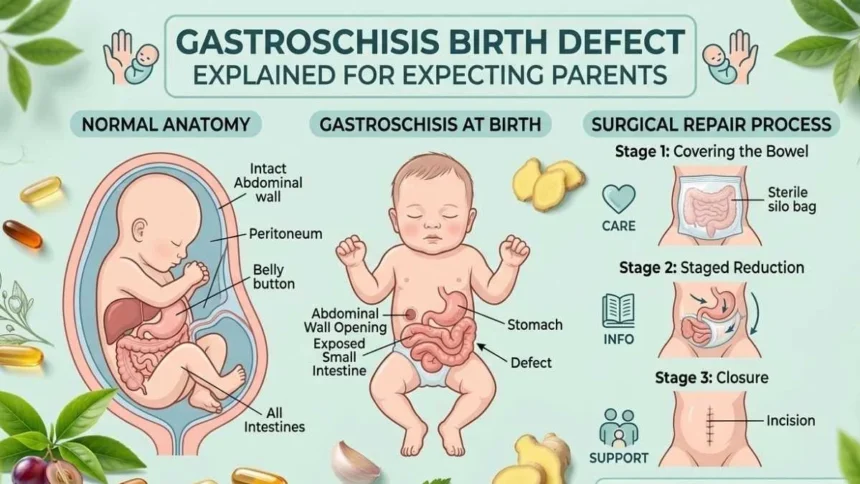
Gastroshiza is a rare congenital condition in which a baby is born with the intestines developing outside the body through a small opening in the abdominal wall. This opening usually appears near the belly button and allows the intestines to extend into the amniotic fluid during pregnancy. The condition may look alarming, but modern prenatal diagnosis and neonatal surgery have greatly improved outcomes for infants born with this birth defect.
In medical terms, gastroshiza is closely related to gastroschisis, an abdominal wall birth defect that develops during early fetal development. With timely medical care, advanced surgical procedures, and proper monitoring during pregnancy, many babies diagnosed with gastroshiza grow up healthy and live normal lives.
Understanding the Condition
During normal fetal growth, the abdominal wall develops and closes to protect internal organs. In babies affected by gastroshiza, this wall does not completely close during early pregnancy. As a result, the intestines grow outside the baby’s body through a small hole in the abdomen.
Because the organs remain exposed to amniotic fluid, the bowel may become swollen or irritated before birth. Doctors monitor these changes carefully throughout pregnancy to prepare for treatment after delivery.
How Common Is This Birth Defect?
Research shows that the condition occurs in approximately one out of every two thousand to four thousand births worldwide. Doctors have also observed that it occurs more frequently among infants born to younger mothers, particularly teenagers. However, it can occur in pregnancies of any maternal age.
Unlike many congenital disorders, gastroshiza is not typically associated with genetic syndromes. Most babies diagnosed with the condition do not have chromosomal abnormalities or inherited disorders, which is reassuring for many families receiving the diagnosis.
Possible Causes and Risk Factors
The exact cause of gastroshiza remains under investigation. Scientists believe that the defect develops early in pregnancy when the abdominal wall is forming. Several factors may contribute to the development of this condition.
• Young maternal age has been associated with higher occurrence rates in research studies.
• Certain environmental exposures during pregnancy may play a role in abnormal fetal development.
• Nutritional factors and limited prenatal care might influence early organ formation.
• Reduced blood flow to the developing abdominal wall could prevent proper closure.
Signs and Physical Characteristics
The most visible sign of gastroshiza appears immediately after birth. The baby’s intestines are seen outside the abdomen through a small opening located beside the belly button.
Doctors also observe several related characteristics during examination.
• The intestines are uncovered and not protected by a membrane.
• The bowel may appear swollen due to exposure to amniotic fluid.
• Feeding difficulties can occur during the early recovery period.
Prenatal Diagnosis and Screening
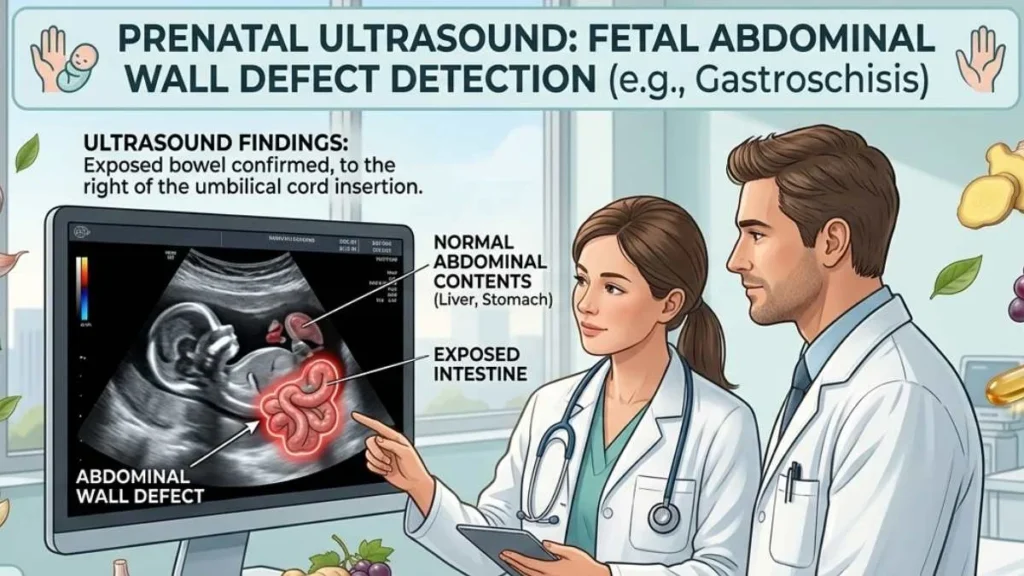
In many pregnancies, gastroshiza can be detected before the baby is born through routine prenatal testing.
Ultrasound imaging often reveals loops of bowel outside the abdominal cavity during the second trimester. This allows physicians to monitor fetal development and prepare medical teams for delivery.
Blood tests performed during pregnancy may also provide early clues. Elevated levels of alpha fetoprotein in the mother’s blood sometimes indicate an abdominal wall defect. When abnormal results are obtained, physicians typically recommend additional ultrasound examinations to confirm the diagnosis.
Early identification provides valuable time for parents and healthcare providers to plan specialized care.
Treatment and Surgical Repair
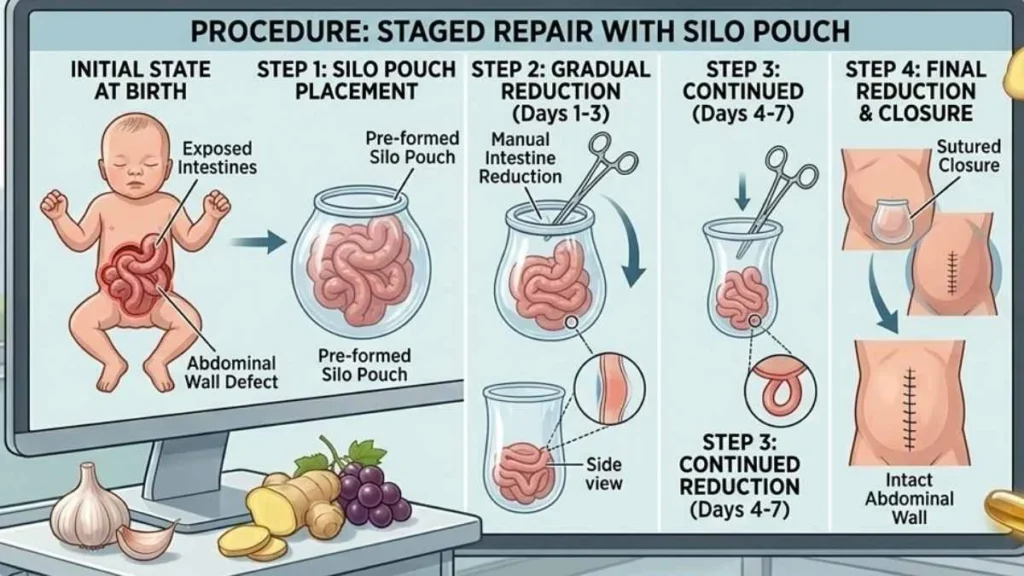
| Treatment Stage | Medical Purpose | Typical Approach |
| Stabilization | Protect exposed organs | Sterile coverings and IV fluids |
| Surgical repair | Return the intestines to the abdomen | Primary repair or staged repair |
| Post-surgery care | Support healing and digestion | NICU monitoring and feeding support |
Recovery and Hospital Care
Recovery time varies depending on the baby’s condition and how the intestines respond after surgery. Many infants remain in the neonatal intensive care unit for several weeks while doctors monitor healing.
During this stage, infants often receive nutrients via intravenous feeding while their digestive systems recover. Gradually, doctors introduce breast milk or formula once the intestines begin functioning normally.
Emotional Support for Families
Learning that a baby has gastroshiza can create emotional stress for expecting parents. Feelings of fear and uncertainty are completely natural when facing a medical diagnosis during pregnancy.
Healthcare teams often provide counseling and educational resources to help families understand the condition and the treatment process. Support groups and conversations with other parents who have experienced similar situations can also offer reassurance.
When families receive clear information and compassionate support, they often feel more prepared for the birth and treatment journey ahead.
FAQs
Can gastroshiza be prevented during pregnancy?
Currently there is no guaranteed way to prevent the condition, though healthy prenatal care may help reduce risk factors.
Do babies with gastroshiza need long-term medication?
Most children do not require long-term medication once recovery from surgery is complete.
Is the condition hereditary in future pregnancies?
The chance of recurrence in future pregnancies is generally considered very low.
Conclusion
Gastroshiza is a congenital abdominal wall condition in which a baby’s intestines develop outside the body through a small opening near the belly button. Although the diagnosis may sound frightening, modern prenatal screening and neonatal surgery have made treatment highly successful.
With early detection, careful pregnancy monitoring, and specialized medical care after birth, most babies recover well and grow into healthy children. Knowledge about this condition helps parents feel informed and confident while working closely with healthcare professionals to ensure the best outcome for their baby.