

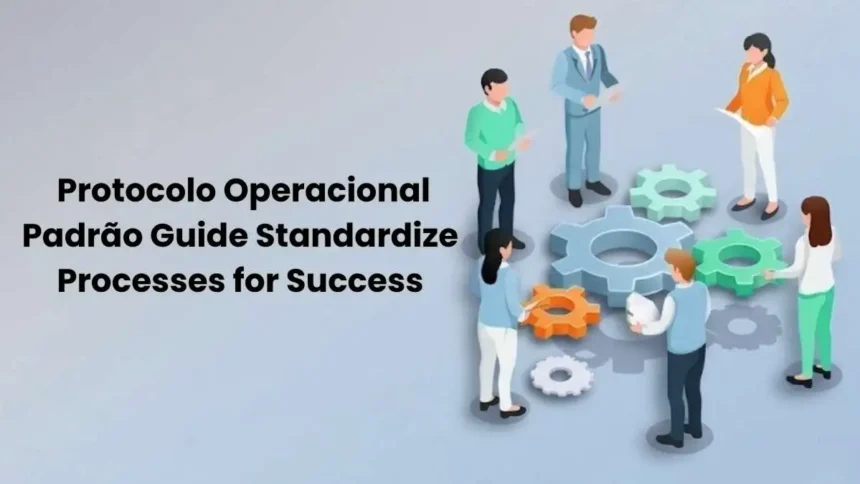
A Protocolo Operacional Padrão (Standard Operating Procedure or SOP) is a detailed, written set of instructions designed to help employees perform routine tasks accurately and consistently. It outlines the exact steps required to complete a process, ensuring that every individual follows the same method regardless of experience or role.
- The Core Objectives of a Standard Operating Procedure
- Why Your Business Needs a Formalized Protocolo Operacional Padrão
- Key Elements of an Effective Protocolo Operacional Padrão
- Step-by-Step Guide to Creating a Robust POP
- Reducing Operational Risks Through Performance Uniformity
- Integrating Industry Regulations and Safety Standards
- The Role of POP in Training and Onboarding New Staff
- Common Mistakes to Avoid When Drafting Procedures
- Tools and Software to Streamline POP Documentation
- Maintaining and Auditing Your Protocolo Operacional Padrão
- FAQs
- Final Thought
Unlike general guidelines, a POP is highly specific. It includes:
- Step-by-step instructions
- Required tools or resources
- Safety precautions
- Compliance requirements
The primary goal is to eliminate ambiguity and create a standardized approach to operations.
The Core Objectives of a Standard Operating Procedure
The implementation of a Protocolo Operacional Padrão is not merely a bureaucratic requirement; it is a strategic maneuver designed to hit three critical targets: Efficiency, Quality, and Uniformity.
- Efficiency: By outlining the fastest and safest route to complete a task, a POP removes unnecessary steps and minimizes downtime.
- Quality Output: When every employee follows the same “gold standard” instructions, the final product or service meets a predictable level of excellence every time.
- Uniformity of Performance: This ensures that “Employee A” and “Employee B” produce identical results, which is vital for brand reputation and customer trust.
Why Your Business Needs a Formalized Protocolo Operacional Padrão
Many organizations fall into the trap of “tribal knowledge,” where vital information exists only in the heads of senior employees. This is a high-risk strategy. Without a formalized POP, businesses face several dangers:
- Operational Risks: Lack of clarity leads to mistakes that can cost thousands in lost materials or time.
- Miscommunication: Verbal instructions are easily forgotten or misinterpreted. A written document provides a single “source of truth.”
- Regulatory Non-Compliance: In industries like healthcare, finance, or manufacturing, failing to follow standardized protocols can result in heavy legal fines or the loss of operating licenses.
Key Elements of an Effective Protocolo Operacional Padrão
A “top-class” POP must be more than just a list of steps. To rank well in Google’s eyes and provide value to the user, it must be structured logically. Every high-quality POP should contain:
- Header Information: Title, document ID, version number, and date of last review.
- Purpose and Scope: A clear statement of why the document exists and which departments or tasks it covers.
- Responsibilities: Defining exactly who is responsible for executing each part of the process.
- Step-by-Step Instructions: The “meat” of the document, clear, imperative sentences that guide the user from start to finish.
Step-by-Step Guide to Creating a Robust POP
Creating a Protocolo Operacional Padrão is a process in itself. To ensure the document is actually usable, follow these phases:
- The Planning Phase: Identify the task that needs documentation. Observe the current workflow and interview the people who perform it daily.
- The Drafting Phase: Write the instructions using simple language. Avoid jargon where possible. Focus on a narrative flow that moves chronologically.
- The Testing Phase: Before finalizing, have a “novice” attempt the task using only your draft. If they get stuck, your instructions need more clarity.
Reducing Operational Risks Through Performance Uniformity
Reducing operational risks becomes significantly easier when organizations implement performance uniformity across all processes. By following a standardized system like a Protocolo Operacional Padrão, employees execute tasks consistently and predictably. This minimizes human error, miscommunication, and deviations from established procedures. Uniform performance ensures that safety protocols are followed correctly, compliance requirements are met, and quality remains consistent. As a result, businesses can identify potential risks early, improve accountability, and maintain a stable and efficient operational environment that supports long-term growth and reliability.
Integrating Industry Regulations and Safety Standards
Integrating industry regulations and safety standards into daily operations is essential for maintaining compliance and protecting employees. A structured Protocolo Operacional Padrão ensures that all processes align with legal and industry-specific requirements. By clearly defining safety procedures, organizations reduce risks, prevent accidents, and avoid regulatory penalties. This integration also promotes accountability, enhances workplace safety, and ensures consistent adherence to best practices, creating a secure and compliant operational environment across all levels of the organization.
The Role of POP in Training and Onboarding New Staff
One of the highest costs for any business is the “time-to-productivity” for new hires. A well-written Protocolo Operacional Padrão acts as a silent mentor. Instead of shadowing a senior staff member for weeks, a new employee can use the POP as a self-service training manual. This not only speeds up the onboarding process but also ensures that the new hire learns the “correct” way to do things, rather than picking up the “bad habits” of their peers.
Common Mistakes to Avoid When Drafting Procedures
Even with the best intentions, POPs can fail. To ensure your content ranks and helps users, avoid these pitfalls:
- Over-Complication: Using 20 words when 5 will do. Keep sentences short and actionable.
- Lack of Accessibility: If the POP is locked in a dusty filing cabinet, it won’t be used. It must be digitally accessible.
- Ignoring the “Doers”: If management writes a POP without talking to the workers on the floor, the document will likely be ignored because it doesn’t reflect the “real-world” challenges of the task.
Tools and Software to Streamline POP Documentation
In 2026, the era of paper manuals is over. Digital transformation has introduced specialized software for SOP and POP management. Tools like Trainual, Waybook, or even cloud-based collaboration suites allow for:
- Real-time updates: Change a step once, and everyone sees the update instantly.
- Rich Media integration: Adding videos or photos to clarify complex steps.
- Tracking and Analytics: Seeing who has read and acknowledged the protocol.
Maintaining and Auditing Your Protocolo Operacional Padrão
Maintaining and auditing a Protocolo Operacional Padrão is essential to ensure its continued accuracy and effectiveness. Regular reviews help identify outdated procedures, gaps, and inefficiencies in operations. By conducting systematic audits, organizations can verify compliance, improve processes, and adapt to regulatory changes. Continuous updates keep the document relevant, while feedback from employees enhances its practicality. This ongoing maintenance strengthens operational consistency, reduces risks, and ensures long-term reliability and performance excellence across all business activities.
FAQs
Q1: How often should a Protocolo Operacional Padrão be updated?
Ideally, a POP should be reviewed annually. However, any change in equipment, software, or legal regulations should trigger an immediate update.
Q2: Can a small business benefit from a POP?
Absolutely. Even a one-person business can use POPs to automate their own thinking, ensuring they don’t forget critical steps during busy periods and making it easier to hire their first employee later.
Q3: Is it better to use text or videos for a POP?
A hybrid approach is best. Clear text provides the structure, while short video clips can demonstrate complex physical movements that are hard to describe in writing.
Final Thought
A well-implemented Protocolo Operacional Padrão is more than just a document; it is a strategic asset that drives discipline, clarity, and operational excellence. When organizations commit to maintaining consistency and continuously improving their processes, they build a strong foundation for growth and resilience. The true value lies in its practical application, where every step contributes to reliability, safety, and quality. By embracing structured operations, businesses position themselves to adapt, scale, and thrive in an increasingly competitive and regulated environment.