


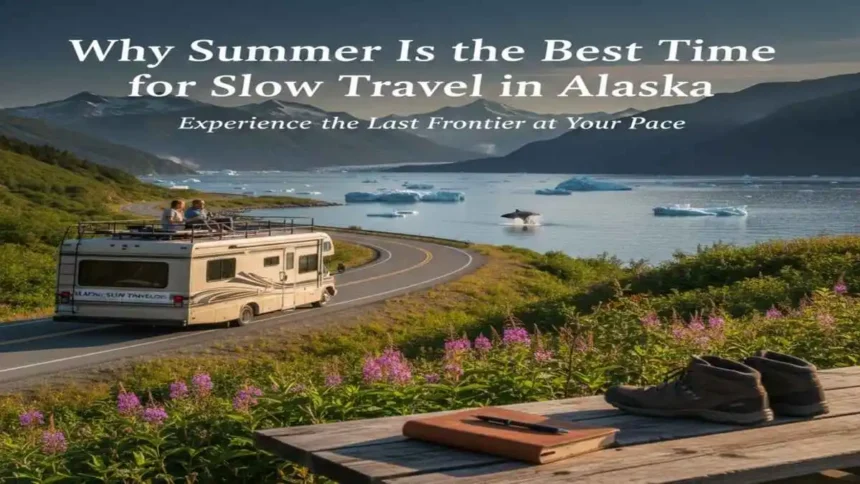
Slow travel isn’t just about moving at a leisurely pace; it’s a mindset. It’s the choice to immerse yourself deeply in a place rather than racing to check items off a bucket list. In a state as massive as Alaska—where driving from one side to the other can take days—rushing is a recipe for exhaustion. Summer offers the unique conditions necessary to truly pause, breathe, and connect with the wild.
Why Summer is Ideal for Lingering
Winter in Alaska is undeniably beautiful, but it presents logistical challenges that make spontaneous exploration difficult. Summer, however, opens the doors wide to the state’s hidden corners.
Endless Daylight
The most significant advantage of Alaskan summers is the Midnight Sun. In many parts of the state, the sun barely dips below the horizon, providing up to 24 hours of daylight around the solstice.
For the slow traveler, this is a gift. You aren’t racing against the sunset to set up camp or finish a hike. You can start your day at noon, hike until 10 PM, and still have plenty of light to cook dinner by a river. This extended daylight removes the urgency from your schedule, allowing you to follow your curiosity rather than a clock.
Wildlife at Its Peak
Summer is when Alaska’s wildlife is most active. It is the season of plenty. Bears emerge from hibernation to feast on salmon runs, moose wander through willow thickets with their calves, and whales migrate to the nutrient-rich coastal waters to feed.
Slow travel is the best way to witness these moments. Instead of a quick drive-by sighting from a bus window, you can spend an entire afternoon sitting quietly on a ridge or drifting in a kayak, waiting for nature to reveal itself. The patience required for wildlife viewing perfectly aligns with the philosophy of slowing down.
Access to the Remote
During winter, many roads and passes are closed due to snow, and remote lodges shut down. Summer unlocks the state’s vast interior and rugged coastlines. Whether it’s a gravel highway leading into the Arctic or a boat ride to a secluded cove, the infrastructure is fully operational, allowing you to reach places that feel completely untouched by the modern world.
Top Destinations for a Slower Pace
Alaska is huge—more than twice the size of Texas. Trying to see it all is impossible. To truly embrace slow travel, pick a region and dive deep.
Coastal Towns and the Inside Passage
The Inside Passage is a network of waterways weaving through islands and fjords in Southeast Alaska. Towns like Sitka, Ketchikan, and Haines are not connected to the main road system, meaning life here inherently moves at a different rhythm—the rhythm of the ferry schedule.
Spend a week in a single coastal town. Walk the docks, visit local totem parks, and watch eagles fish in the harbor. The maritime culture here is rich and welcoming, perfect for travelers who want to chat with locals over fresh halibut and learn about the history of the land.
National Parks and Wilderness Areas
Denali National Park is the crown jewel, but it attracts crowds. For a quieter experience, consider Wrangell-Saints. Elias National Park. It is the largest national park in the United States, yet it sees a fraction of the visitors Denali does. Here, you can hike across glaciers, explore abandoned copper mines, and camp in solitude.
Similarly, Lake Clark National Park offers incredible solitude. Accessible only by plane or boat, it provides an intimate wilderness experience where the silence is profound, and the scenery is unmatched.
Activities That Force You to Slow Down
The best activities in Alaska are those that cannot be rushed. They require rhythm, patience, and presence.
Hiking and Trekking
You don’t need to be an elite mountaineer to enjoy Alaska on foot. There are countless trails ranging from coastal boardwalks to alpine ridges. The key is to stop looking at your boots and look around.
Notice the wildflowers blooming in the tundra—tiny, resilient bursts of color. Listen for the whistle of a marmot. When you hike slowly, the landscape changes from a pretty backdrop into a complex, living ecosystem.
Kayaking and Water Tours
Seeing Alaska from the water changes your perspective. Paddling a kayak through a fjord allows you to approach glaciers safely and silently. You can hear the ice cracking and popping—what locals call “glacial thunder”—before massive chunks calve into the sea.
Drifting quietly also allows you to get closer to marine life like otters and seals without disturbing them. It’s a meditative way to travel, powered by your own energy and guided by the tides.
Tips for Planning Your Slow Adventure
While the goal is to be flexible, a little preparation ensures your slow travel experience is relaxing rather than stressful.
Best Time to Visit and Where to Stay
Mid-June to late August offers the warmest weather, but early June and September can offer fewer crowds and fewer mosquitoes. When booking accommodation, look for places that encourage lingering.
If you are heading toward unparalleled fishing and bear viewing, you might look into hotels in King Salmon, Alaska. This gateway to Katmai National Park offers a comfortable basecamp where you can rest after long days on the water or the viewing platforms at Brooks Falls. Choosing a central hub like this allows you to unpack once and explore the surrounding wilderness at your own pace, rather than moving to a new hotel every night.
Packing Essentials
Alaska’s weather is unpredictable. It can be sunny and 70°F one minute and raining and 45°F the next. The secret is layers.
- Base layers: Merino wool or synthetic materials (no cotton).
- Insulation: A fleece or puffy jacket.
- Outer shell: A high-quality rain jacket and rain pants are non-negotiable.
- Footwear: Waterproof hiking boots or rubber boots (often called “Alaskan sneakers”).
- Sleep mask: The midnight sun is beautiful, but it can wreak havoc on your sleep cycle if you aren’t prepared.
Sustainable Travel Practices
Slow travel is inherently more sustainable. By staying in one place longer, you reduce your carbon footprint from transportation. Support local businesses, respect wildlife by keeping a safe distance, and always follow Leave No Trace principles. Alaska is wild, but it is also fragile. Treating it with care ensures it remains pristine for generations to come.
Conclusion
There is a saying in the north: “Alaska time.” It refers to the relaxed, flexible attitude locals have toward schedules, dictated often by weather and daylight rather than appointments. Adopting this mindset is the ultimate souvenir. When you allow yourself to slow down, you stop watching the clock and start watching the clouds. You stop counting miles and start counting memories. This summer, trade the rush for the hush of the wilderness. Let Alaska teach you the art of sitting still.