


In modern cryptocurrencies and decentralized systems, traditional blockchains often face scalability and speed limitations. BlockDAG (Block Directed Acyclic Graph) addresses these challenges by allowing multiple blocks to be created and confirmed simultaneously. Unlike linear blockchains, it organizes blocks in a directed acyclic graph, enabling parallel processing. This approach enhances transaction throughput, reduces latency, and provides a more scalable and efficient framework for next-generation digital networks.
What is BlockDAG?
BlockDAG (Block Directed Acyclic Graph) is an advanced data structure used in some cryptocurrencies and decentralized networks. Unlike traditional linear blockchains, it allows multiple blocks to be created and confirmed at the same time by organizing them in a directed acyclic graph. This parallel structure improves scalability, increases transaction throughput, and reduces network congestion for more efficient operations.
How BlockDAG Works
In a conventional blockchain like Bitcoin, miners compete to add the next block, and only one miner succeeds per block interval. If multiple miners create blocks simultaneously, the network eventually resolves this through consensus, leaving some blocks orphaned. This approach, while secure, limits transaction throughput and slows confirmation times.
- Directed: Every edge in the graph points from a parent block to a child block.
- Acyclic: There are no cycles; a block cannot eventually reference itself.
- Graph: Multiple paths can exist, allowing a more flexible, parallelized structure.
Because of this structure, nodes can process transactions from multiple blocks concurrently, improving transaction throughput and network efficiency.
Key Features of BlockDAG
1. Parallel Block Creation
Unlike linear blockchains, it allows miners or validators to create blocks simultaneously, significantly reducing the chance of orphaned blocks and increasing overall throughput.
2. Multiple Parent References
Each block can reference more than one parent block, which helps in consolidating divergent branches and maintaining a unified ledger without discarding valid blocks.
3. Enhanced Scalability
By supporting multiple blocks per confirmation interval, it networks can handle higher transaction volumes without bottlenecking, which is a limitation in traditional blockchains.
4. Lower Latency
It reduces confirmation times, as blocks can be accepted and referenced in parallel rather than waiting for linear chain propagation.
BlockDAG vs Traditional Blockchain
| Feature | Traditional Blockchain | BlockDAG |
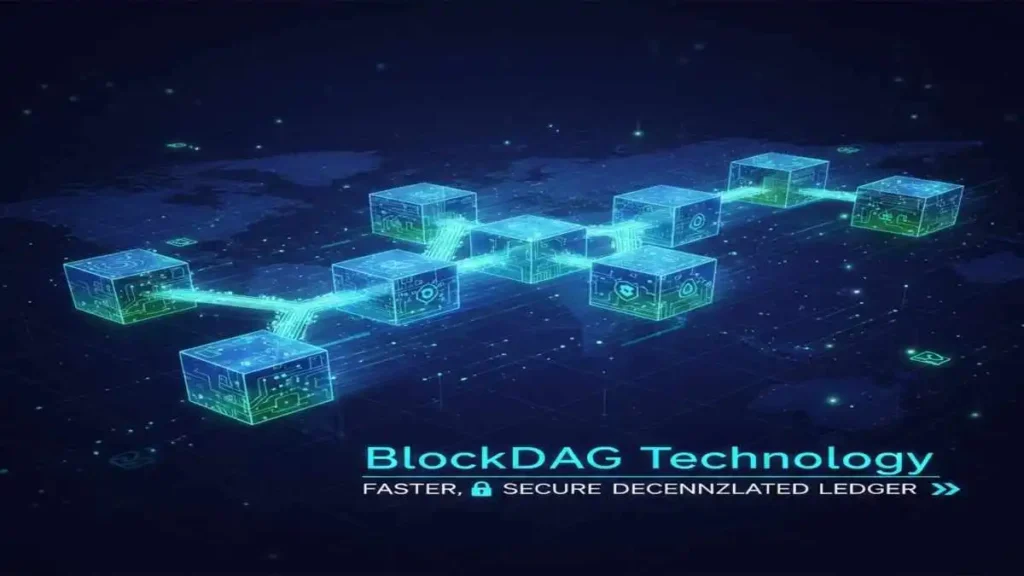
| Structure | Linear chain of blocks | Directed acyclic graph (DAG) |
| Block Parents | Single parent per block | Multiple parents per block allowed |
| Parallelization | Limited | High (simultaneous block production) |
| Scalability | Moderate | High |
| Confirmation Speed | Slower (dependent on block time) | Faster (parallel confirmations) |
Advantages of BlockDAG over Traditional Blockchain
- Higher Throughput: Supports multiple blocks simultaneously, increasing the number of transactions processed per second.
- Reduced Orphaned Blocks: Parallel block creation minimizes discarded blocks, making the system more efficient.
- Faster Confirmation Times: Transactions are confirmed quicker due to concurrent block validation.
- Better Resource Utilization: Less computational power is wasted compared to traditional blockchains with orphaned blocks
Prominent BlockDAG Implementations
Several cryptocurrencies and decentralized systems have explored BlockDAG as an alternative to traditional blockchain architectures. Notable implementations include:
- IOTA: Uses a variation of it called the Tangle, designed for the Internet of Things (IoT) ecosystem, enabling feeless microtransactions and parallel validation.
- Nano: Employs a block-lattice structure, a form of it, where each account has its own blockchain, allowing for asynchronous updates and instant transactions.
- Spectre and Phantom: Research-based cryptocurrencies that use their consensus mechanisms to improve scalability while maintaining security.
These implementations demonstrate how it can be adapted to different requirements, from high-frequency micropayments to large-scale decentralized networks.
Applications of BlockDAG
- High-Frequency Payments: Microtransactions in IoT devices or financial services benefit from rapid confirmation times.
- Decentralized Finance (DeFi): Platforms requiring high transaction throughput can leverage it to handle thousands of concurrent operations.
- Supply Chain and Logistics: Multiple parallel transactions can track shipments, certifications, and verifications more efficiently than a linear blockchain.
- Gaming and Virtual Assets: It can facilitate real-time asset exchanges without bottlenecks, ensuring smoother in-game economies.
Navigating the Complexities of BlockDAG
While BlockDAG offers superior scalability and speed, it introduces unique challenges. Implementing complex consensus algorithms is necessary to prevent double-spending. Parallel block creation increases network overhead and bandwidth demands. Software architecture becomes more intricate, requiring careful design to avoid forks or inconsistencies. Additionally, balancing enhanced throughput with security is critical, as improper configurations may expose the system to vulnerabilities, making rigorous testing and cryptographic safeguards essential for reliable deployment.
FAQs
Q1. Can BlockDAG handle high transaction volumes?
Absolutely. BlockDAG’s parallelized block production allows it to process thousands of transactions per second, making it ideal for DeFi platforms, IoT networks, and high-frequency trading systems.
Q2. How does BlockDAG achieve consensus?
It uses protocols like SPECTRE, PHANTOM, or GHOST, which allow the network to confirm multiple blocks simultaneously while maintaining agreement on the ledger’s state.
Q3. Why is BlockDAG considered scalable?
By allowing multiple blocks to exist and confirm at the same time, it scales horizontally, handling higher transaction volumes without slowing down the network.
Final Thoughts
BlockDAG represents a major evolution in blockchain technology, offering parallel block confirmations, multi-parent structures, and high scalability. Addressing the limitations of traditional linear chains, it enables faster transactions, reduced forks, and enhanced security. As cryptocurrencies, DeFi platforms, and enterprise networks grow, BlockDAG’s efficient, graph-based architecture positions it as a future-proof solution for high-performance decentralized systems.