


Walk into a modern supermarket, pick up a bunch of celery, and you’ll likely get pale green, watery stalks with a mild crunch and an almost neutral taste. Now compare that to what traditional Balkan kitchens call Pravi celer, a plant so aromatic that it perfumes an entire pot of soup before the first spoonful is taken.
- What Exactly Is Pravi Celer?
- Why Modern Celery Tastes Weaker
- Culinary Role of Pravi Celer in Balkan Cuisine
- Nutritional Profile: Why Pravi Celer Is More Than Food
- Anti-inflammatory Mechanisms
- Traditional Uses Beyond Food
- FAQs
- Practical Uses: How to Use Pravi Celer Today
- Why Pravi Celer Is Making a Quiet Comeback
- Final Perspective
This isn’t just a stronger version of celery. It is closer to the original culinary identity of Apium graveolens, where every part of the plant- root, seed, stalk, and leaf- was valued not for texture alone, but for chemical intensity, medicinal depth, and culinary foundation.
The shift from “true celery” to modern mild varieties reflects a broader change in the food system: industrial agriculture prioritized shelf life, uniformity, and water content over phytochemical richness. In contrast, Pravi celer represents a more ancient, sensory-dense form of nutrition.
What Exactly Is Pravi Celer?
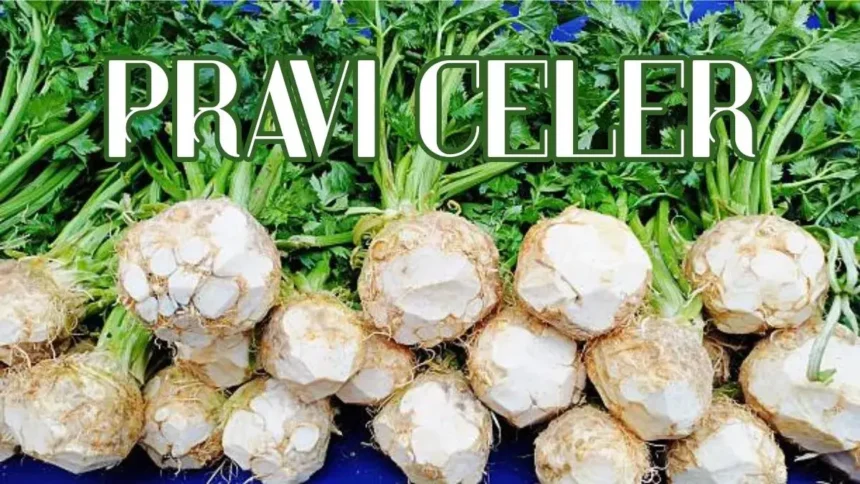
Pravi celer is the South Slavic term meaning “true celery.” Botanically, it refers to traditional forms of Apium graveolens cultivated for:
- Strong aromatic leaves
- Intense-flavored seeds
- Large, fibrous, knobby root (celeriac-like form)
- Concentrated volatile oils
Unlike modern celery bred for crunch and mildness, Pravi celer prioritizes essential oil density, especially compounds like:
- Limonene (citrus-like aroma, antioxidant activity)
- Phthalides (vascular relaxation effects)
- Apigenin (anti-inflammatory flavonoid)
- Coumarins (circulatory support properties)
These compounds explain why traditional Balkan dishes built around celery taste “deeper,” almost brothy, even before meat is added.
Why Modern Celery Tastes Weaker
Most people don’t realize that modern celery is a result of selective breeding for water content and fiber uniformity. Over decades, agricultural systems favored stalks that:
- Stay crisp longer during transport
- Have reduced bitterness
- Are visually uniform in size and color
The trade-off is significant:
| Trait | Pravi Celer | Modern Celery |
| Aroma intensity | High | Low |
| Essential oils | Dense | Diluted |
| Medicinal compounds | Concentrated | Reduced |
| Culinary role | Base flavor builder | Texture ingredient |
Culinary Role of Pravi Celer in Balkan Cuisine
In Balkan cooking, Pravi celer is not a garnish; it is a structural ingredient.
1. The Aromatic Base of Soups and Stews
Traditional dishes like:
- Beef and vegetable soups
- Chicken broths
- Slow-cooked bean stews
- Sarma (stuffed cabbage rolls)
All begin with a sofrito-like base of celery, onion, and carrot.
But here’s the key insight:
Pravi celer doesn’t just add flavor; it builds the dish’s flavor architecture.
Its volatile compounds dissolve into fat and water early in cooking, creating a background “umami bridge” that supports meat and legumes.
2. Leaves as a Secret Flavor Weapon
Unlike Western cooking, where celery leaves are often discarded, Balkan kitchens treat them as a primary herb, like parsley.
They are used for:
- Finishing soups
- Stuffing meats
- Herbal broths
- Fermented vegetable mixes
Celery leaves contain higher concentrations of flavonoids than stalks, especially apigenin, which contributes a slightly bitter but deeply aromatic finish.
3. Seeds: The Forgotten Spice
Celery seeds from Pravi celer are significantly more potent than commercial variants.
They contain:
- High levels of volatile oils
- Strong antimicrobial compounds
- Natural sodium-like flavor intensity
They are used in:
- Pickling brines
- Meat rubs
- Traditional digestive teas
In some rural Balkan practices, celery seed infusions are still used to regulate digestion and support mild blood pressure.
Nutritional Profile: Why Pravi Celer Is More Than Food
Pravi celer is not just aromatic; it is nutritionally dense in ways modern celery rarely matches.
Key nutrients include:
- Vitamin K: essential for blood clotting and bone metabolism
- Vitamin C: immune support and collagen synthesis
- Vitamin A precursors: eye and skin health
- Dietary fiber: gut motility and microbiome support
- Potassium: electrolyte balance and cardiovascular function
But the real story lies in its phytonutrient complexity.
Anti-inflammatory Mechanisms
Compounds like apigenin and luteolin influence inflammatory pathways by:
- Modulating cytokine production
- Reducing oxidative stress markers
- Supporting endothelial (blood vessel) relaxation
This is why traditional herbal systems often classify celery as a “cooling” plant, a folk interpretation of its measurable biological effects on inflammation and circulation.
Traditional Uses Beyond Food
1. Digestive Support
In Balkan folk medicine, celery tea is used to:
- Reduce bloating
- Stimulate bile production
- Improve digestion after heavy meat meals
The mechanism is linked to bitter compounds that stimulate the secretion of digestive enzymes.
2. Mild Diuretic Effects
Celery seeds and leaves increase urine output, which historically made them useful for:
- Fluid retention
- Kidney “cleansing” traditions
- Post-salt-heavy meals
3. Metabolic Balance
Emerging research suggests celery’s phytochemicals may support:
- Blood pressure regulation
- Lipid metabolism
- Mild glucose stabilization
While not a treatment, it contributes to dietary patterns associated with cardiovascular health.
FAQs
1. Is Pravi celery different from celery in supermarkets?
Yes. It is more aromatic and nutrient-dense, and it uses all plant parts rather than just the stalks.
2. Can you eat it raw?
Yes, but it is usually more fibrous and intense in flavor. It is preferred cooked in traditional dishes.
3. Is celery root part of Pravi celer?
Yes. The knobby root (similar to celeriac) is a key edible component in traditional varieties.
4. Why is Pravi celer important in Balkan cuisine?
Because it forms the flavor base of soups, stews, and broths, replacing synthetic flavor enhancers.
5. Does it have medicinal benefits?
It contains bioactive compounds linked to anti-inflammatory and digestive effects, though it is not a pharmaceutical treatment.
Practical Uses: How to Use Pravi Celer Today
If you want to incorporate Pravi celer into modern cooking, think beyond salads.
Try it in:
- Slow-cooked bone broth (enhances depth naturally)
- Lentil or bean soups (improves umami profile)
- Pickling brines (celery seed infusion)
- Herbal teas (digestive support blends)
- Roasted vegetable bases (earthy sweetness development)
A key professional tip:
Always sauté celery early in the cooking process in fat (oil or butter). This releases its aromatic compounds more effectively than boiling alone.
Why Pravi Celer Is Making a Quiet Comeback
There is a growing global interest in:
- Heirloom vegetables
- Functional foods
- Traditional Balkan and Mediterranean diets
Pravi celer fits perfectly into this movement because it represents:
- Flavor authenticity
- Whole-plant utilization
- Nutritional density over appearance
Chefs and nutritionists are rediscovering that modern “clean eating” often overlooks older crops that were inherently more complex in flavor chemistry.
Final Perspective
Pravi celer is not just an ingredient; it is a culinary philosophy preserved through centuries of Balkan cooking. It reflects a time when food was valued for intensity, not convenience; for complexity, not uniformity.
Understanding it changes how you think about celery altogether. What most people consider a mild vegetable is, in its traditional form, a deep aromatic system capable of shaping entire dishes from the inside out.
The real question is no longer “What is celery?” but rather:
How much flavor have we been leaving behind by forgetting Pravi celer?