

Kellogg Innovation Network (KIN) was designed to function differently. Most leadership networks are transactional. People attend a conference, exchange business cards, sit through keynote speeches, and return to work unchanged.
- What Is the Kellogg Innovation Network?
- The Limits of Isolated Expertise
- KIN’s Approach to Sustainable Innovation
- Real-World Influence of Leadership Networks Like KIN
- What Makes KIN Different From Traditional Business Conferences?
- Lessons Organizations Can Learn From the KIN Model
- Challenges Facing Global Innovation Networks
- Frequently Asked Questions
- How is KIN different from a traditional business conference?
- Conclusion
Founded through Northwestern University’s Kellogg School of Management, KIN operates less like a traditional professional association and more like a long-term leadership laboratory. Its members include executives, policymakers, entrepreneurs, academics, artists, technologists, and nonprofit leaders who gather around one central idea: the world’s hardest problems cannot be solved within institutional silos.
What Is the Kellogg Innovation Network?
The Kellogg Innovation Network, commonly known as KIN, is a cross-sector community founded at Northwestern University’s Kellogg School of Management. It brings together senior leaders from multiple industries and regions to explore emerging global issues and develop innovative responses to them.
Unlike many executive forums that focus primarily on networking opportunities, KIN was built around long-term dialogue and interdisciplinary collaboration.
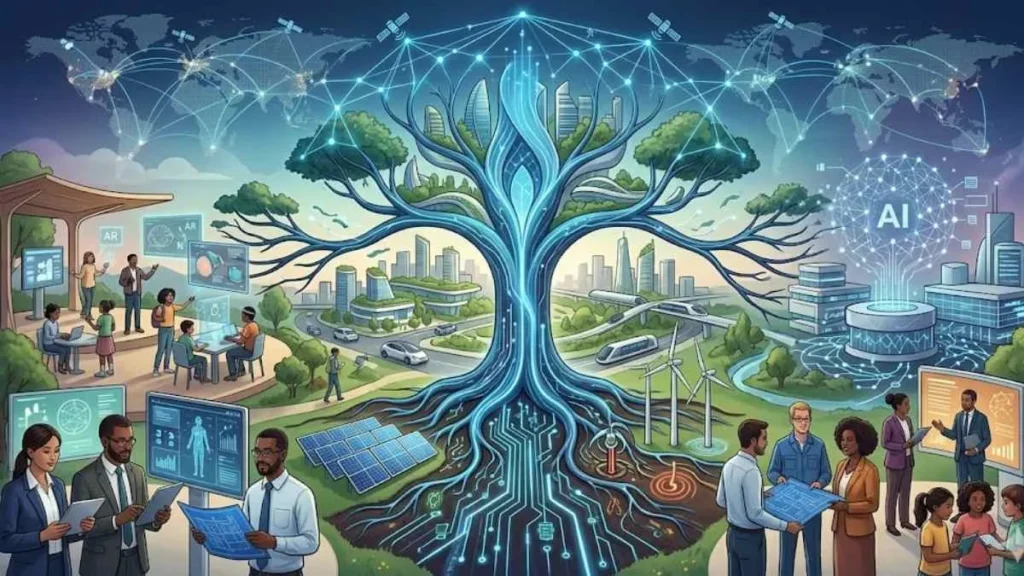
Participants often come from areas such as:
- Corporate leadership
- Public policy
- Higher education
- Healthcare
- Sustainability
- Technology
- Social entrepreneurship
- International development
- Creative industries
The core philosophy behind KIN is straightforward but powerful: meaningful innovation happens when people with fundamentally different perspectives work together on shared challenges.
The Limits of Isolated Expertise
One of the most common failures in modern leadership is over-specialization. Organizations often become highly efficient within their own systems while losing visibility into the broader ecosystem around them.
KIN’s model tries to reduce those blind spots. By placing leaders from radically different sectors into the same conversations, the network creates conditions for more layered and realistic thinking.
That may sound abstract, but in practice it changes how problems are framed.
Instead of asking:
“How do we optimize our organization?”
The question becomes:
“How do we improve the system itself?”
That distinction is significant.
KIN’s Approach to Sustainable Innovation
Sustainable innovation is often misunderstood as purely environmental innovation. In reality, the concept is much broader.
Within networks like KIN, sustainability generally refers to creating solutions that remain viable economically, socially, ethically, and operationally over time.
Real-World Influence of Leadership Networks Like KIN
It is difficult to measure the impact of intellectual networks using conventional metrics because their influence is often indirect. The value frequently appears through:
- New partnerships
- Policy influence
- Research collaboration
- Institutional strategy shifts
- Cross-border initiatives
- Leadership development
- Knowledge transfer between sectors
For example, a conversation between healthcare executives, data scientists, and policymakers may later influence how organizations approach digital health infrastructure.
These networks function partly as early-warning systems and partly as idea incubators.
What Makes KIN Different From Traditional Business Conferences?
Many executive events prioritize visibility over depth. Sessions are polished, highly branded, and optimized for attention rather than sustained intellectual engagement.
KIN has historically emphasized something different: dialogue.
More intimate leadership communities often create space for more honest conversations about uncertainty, institutional failure, and unresolved challenges. That matters because innovation rarely emerges from environments where everyone pretends to already have the answer.

KIN’s long-term community structure helps create that dynamic.
Lessons Organizations Can Learn From the KIN Model
Even companies or institutions that never directly engage with KIN can learn from its underlying principles.
1. Diverse Thinking Produces Better Strategy
Homogeneous leadership teams frequently overlook emerging risks and opportunities.
Organizations that intentionally bring together different disciplines tend to make more resilient decisions.
2. Innovation Requires Institutional Trust
Employees are less likely to experiment when organizations punish uncertainty or failure.
Innovation cultures depend heavily on psychological safety and transparent communication.
3. Systems Thinking Matters
Most major organizational problems are interconnected.
Improving one department while damaging the broader ecosystem usually creates long-term inefficiency.
4. Long-Term Reputation Is a Strategic Asset
Organizations increasingly compete on trust, not just efficiency.
Consumers, employees, investors, and regulators now scrutinize ethical behavior, sustainability commitments, and governance practices more closely than in previous decades.
5. Leadership Is Becoming More Collaborative
The era of isolated executive decision-making is fading in many sectors.
Future-focused leadership increasingly depends on coalition-building, adaptability, and interdisciplinary understanding.
Challenges Facing Global Innovation Networks
While networks like KIN offer significant advantages, they also face legitimate challenges.
Turning Dialogue Into Action
One common criticism of high-level leadership communities is that conversations can become overly conceptual.
Ideas alone do not create change. Real-world implementation requires funding, operational execution, political alignment, and measurable accountability.
Maintaining Diversity of Perspective
Another challenge is avoiding intellectual homogeneity.
When leadership communities become too insular or elite-driven, they risk reinforcing existing assumptions instead of challenging them. True innovation requires disagreement, cultural diversity, and inclusion of perspectives beyond traditional power centers.
Frequently Asked Questions
What is the Kellogg Innovation Network (KIN)?
The Kellogg Innovation Network is a global leadership community founded through Northwestern University’s Kellogg School of Management.
What is the purpose of KIN?
KIN aims to encourage sustainable innovation, interdisciplinary problem-solving, and long-term strategic thinking by bringing together leaders.
Who participates in KIN?
Participants typically include executives, policymakers, entrepreneurs, academics, researchers, nonprofit leaders, and experts from fields.
How is KIN different from a traditional business conference?
KIN emphasizes ongoing dialogue, collaborative thinking, and cross-sector learning around major global issues.
Conclusion
The Kellogg Innovation Network represents an important evolution in how leadership communities operate in a complex world.
Its significance lies less in prestige and more in methodology: bringing together people who would not normally share the same room and asking them to think collectively about long-term global challenges.
That approach may become increasingly valuable in the years ahead.