


Introduction
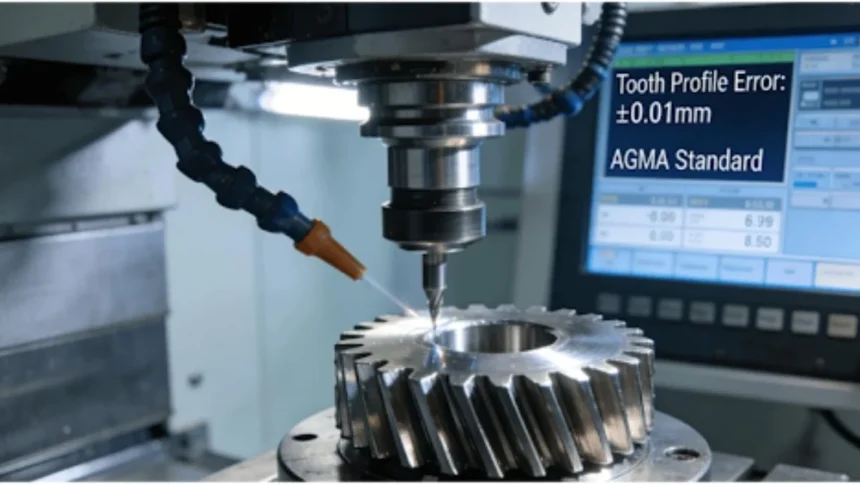
Pinion Machining primary advantage lies in its exceptional high-precision tooth profile control. This capability significantly reduces transmission noise and minimizes the risk of mechanical failure. It is particularly ideal for manufacturing critical components in the automotive and aerospace industries, where it contributes to substantially extending equipment service life and enhancing overall operational reliability.
- Introduction
- What is Pinion Machining and Its Importance in Precision Manufacturing?
- Pinion vs Gear: How Key Differences Influence Design Choices?
- How to Enhance Transmission Efficiency through Spur Gear and Pinion Pairing?
- How Does Spin Pinion Machining Achieve High Efficiency and Low Cost?
- What are the Application Challenges of Steel Spin Pinion Precision Machining in High-End Industries?
- Conclusion
- Author Biography
- FAQs
What is Pinion Machining and Its Importance in Precision Manufacturing?
In the realm of Precision Manufacturing Services, the production of high-quality gears is paramount. At the heart of many gear systems lies the pinion, a small gear that meshes with a larger one or a rack. Precision pinion machining is the specialized process of manufacturing these critical components with extremely high accuracy. This process typically involves several stages, including gear hobbing for cutting the teeth and grinding for achieving final dimensions and superior surface finish.
The importance of precise pinion manufacturing cannot be overstated. It directly influences the efficiency, noise level, and longevity of the entire transmission system. For instance, in automotive parts production, a accurately machined pinion ensures smooth power transfer, reduces energy loss, and minimizes operational noise. Industry standards, such as those set by the American Gear Manufacturers Association (AGMA), provide strict guidelines for gear geometry and tolerances.
Adherence to these standards, facilitated by advanced CNC Machining Technology, is crucial for ensuring interoperability and reliability. By leveraging state-of-the-art machinery, manufacturers can control microscopic errors, leading to components that meet the rigorous demands of modern applications. For a deeper dive into the specifics, resources like this one on Precision CNC Machining offer valuable insights.
The Core Processes of Pinion Creation
The journey from a raw metal blank to a finished pinion involves precision-driven steps.
l Gear Hobbing and Shaping
The initial tooth formation is often done through hobbing, a continuous machining process where a hob (a cutting tool) generates the gear teeth. This method is efficient for producing spur and helical gears.
l Finishing through Grinding
After heat treatment, which can introduce minor distortions, precision grinding is employed. This abrasive process removes a small amount of material to achieve the exact final dimensions, tooth profile, and desired surface finish, ensuring minimal noise and vibration.
The Role of Quality Control
Quality control is integrated throughout the manufacturing process. Coordinate Measuring Machines (CMM) and gear inspection systems are used to verify critical parameters like pitch, profile, and lead, ensuring every pinion complies with design specifications and AGMA standards.
Pinion vs Gear: How Key Differences Influence Design Choices?
While the terms are often used interchangeably, understanding the distinction in the pinion vs gear dynamic is crucial for optimal design. The primary difference lies in their size and position within a gear pair. A pinion is typically the smaller of two meshing gears, and more importantly, it is the driving component in most applications. This fundamental difference leads to significant design implications.
Because the pinion has fewer teeth, each tooth undergoes more stress cycles than a tooth on the larger gear for the same operating period. This makes the pinion more susceptible to wear and fatigue failure. Consequently, pinions often require higher-strength materials, such as alloy steels, and more robust heat treatment processes to enhance surface hardness and core toughness. In Automotive Parts Production, for example, the pinion in a differential system is a critical component whose failure would lead to complete drivetrain malfunction.
Design choices must balance performance with cost, often opting for superior materials for the pinion while potentially using slightly less expensive materials for the larger gear. This approach is guided by international quality standards like ISO 9001, which ensure consistent material properties and manufacturing processes. For projects requiring quick validation, Rapid Prototyping Solutions allow engineers to test different material pairings and geometries before committing to full-scale production.
How to Enhance Transmission Efficiency through Spur Gear and Pinion Pairing?
The combination of a spur gear and pinion is one of the most common and efficient methods for transmitting power between parallel shafts. The efficiency of this pairing is heavily dependent on the precision of their engagement. Key parameters such as pressure angle and module must be meticulously optimized during the design phase. A correct pressure angle ensures smooth force transfer, while a properly selected module dictates the tooth size relative to the load.
The primary advantage of spur gears is their simplicity and cost-effectiveness. However, any imperfection in the spur gear and pinion mesh can lead to increased noise, vibration, and power loss. Through advanced machining techniques, manufacturers can control tooth profile errors and base pitch deviations to a high degree of accuracy. This results in a smoother transfer of motion, significantly reducing acoustic emissions and mechanical losses.
In sensitive applications like Aerospace Components Manufacturing, where reliability is non-negotiable, tolerances are often held to within ±0.01mm. This level of precision, verified against AGMA standards, ensures that the gear pair operates efficiently under extreme conditions. The spin pinion machining process is particularly effective here, as it allows for the high-accuracy manufacturing of these critical components, contributing to the overall performance and safety of the aerospace system.
How Does Spin Pinion Machining Achieve High Efficiency and Low Cost?
Spin pinion machining represents a significant advancement in gear manufacturing technology, offering a compelling combination of high efficiency and cost reduction. This innovative method is a dry machining process, which eliminates the need for cutting oils or coolants. This fundamental characteristic drives several key benefits that align with the needs of modern manufacturing, including the demand for rapid prototyping solutions.
The absence of coolant simplifies the machining environment, reducing the time required for setup and cleanup. This contributes to a reported efficiency increase of up to 20% compared to traditional wet machining. Furthermore, the dry process produces dry chips that are easier to manage and recycle, leading to a reduction in waste disposal costs and a smaller environmental footprint, a principle supported by ISO 14001 environmental management standards. For businesses, this translates into lower operational costs and a more sustainable manufacturing process.
The technique is highly adaptable, making it ideal for both prototype development and small-batch production. A notable application is in steel spin pinion precision machining, where the process consistently produces high-quality pinions from tough materials without the expense and hassle of coolant systems. Companies looking for expert execution of this technology can explore specialized services for Pinion Machining.
The Economic Advantages of Dry Machining
The economic case for spin pinion machining is strong, primarily driven by the elimination of coolant-related expenses.
l Reduced Fluid Management Costs
Businesses save on the costs of purchasing, filtering, and disposing of cutting fluids. This also removes the need for associated equipment like pumps, filters, and tanks.
l Enhanced Tool Life and Productivity
In many cases, running dry at optimized parameters can extend tool life. Combined with faster cycle times, this leads to higher overall equipment effectiveness and lower cost per part.
Flexibility for Modern Production Demands
This method’s agility makes it perfectly suited for the fast-paced demands of today’s industry, allowing for quick transitions between different pinion designs and small production runs without significant downtime.
What are the Application Challenges of Steel Spin Pinion Precision Machining in High-End Industries?
The use of steel spin pinion precision machining in demanding sectors like aerospace and advanced robotics presents a unique set of challenges. While high-strength steel offers excellent durability and load-bearing capacity, its machining, especially to the extreme tolerances required, is difficult. One of the primary challenges is controlling heat during both machining and subsequent heat treatment processes. Improper thermal management can lead to residual stresses and microstructural changes, causing distortions that compromise the final geometry of the pinion.
In applications such as aerospace components manufacturing, a rack and pinion gear system for flight control surfaces must operate flawlessly for thousands of hours under varying loads and temperatures. Achieving this requires not only precise machining but also meticulous control over the entire manufacturing workflow. Case studies demonstrate that through advanced grinding techniques and controlled atmosphere heat treatment, manufacturers can produce steel pinions that exceed 5,000 hours of service life.
Material selection is guided by rigorous standards from organizations like ASM International, ensuring the steel’s properties are consistent and suitable for the application. Furthermore, compliance with industry-specific certifications such as AS9100D is essential, as it provides a quality assurance framework that guarantees the components meet the stringent safety and reliability requirements of the aerospace industry.
Conclusion
In summary, Pinion Machining, through advanced processes like spin pinion machining, directly addresses the core challenges of gear system failure by enabling unparalleled precision and control over microscopic errors. This approach brings tangible benefits to manufacturing, including enhanced transmission efficiency, prolonged component life, and optimized production costs. The integration of rigorous quality standards and sustainable practices ensures that these components meet the demands of high-stakes industries from automotive to aerospace.
For engineers and designers looking to leverage these advancements for their projects, partnering with an experienced manufacturer is crucial.
As demonstrated by providers like JS Precision, a robust certification system ensures that every component, from a rapid prototype to a full production run, meets the highest standards of quality and reliability. To explore custom solutions that can optimize your gear designs and improve your product performance, contacting a professional Precision Manufacturing Services provider is the recommended next step.
Author Biography
The author is a seasoned expert in the precision manufacturing field with extensive experience in gear technology research and application. Their work focuses on the implementation of advanced machining methodologies to solve complex engineering challenges in various high-tech industries.
FAQs
Q1: What is the main advantage of Pinion Machining?
A: Pinion Machining provides high-precision tooth profile control, which reduces transmission noise and the risk of failure. This makes it ideal for automotive and aerospace components, significantly extending equipment service life.
Q2: How to choose between a pinion and a gear in design?
A: The choice is based on tooth count and application load. Pinions are suitable for high-speed scenarios but require higher strength materials to prevent premature wear due to more frequent stress cycles.
Q3: What are common issues with spur gear and pinion pairing?
A: Common problems include improper meshing and noise, which can be resolved by optimizing the module and applying correct heat treatment to ensure smooth and efficient power transmission.
Q4: Is Spin Pinion Machining suitable for small-batch production?
A: Yes, this technology supports rapid production changes, making it ideal for prototyping and small batches. It effectively shortens lead times while reducing overall manufacturing costs.
Q5: How are steel spin pinions engineered for high-temperature environments? A: They are engineered through case hardening processes that enhance surface hardness. Combined with precision machining, this allows them to maintain performance under high temperatures, meeting stringent aerospace standards.