


Deltasone is a brand name for prednisone, a prescription corticosteroid medication used to reduce inflammation and suppress overactive immune responses. For decades, it has remained one of the most frequently prescribed oral steroids because it can quickly control symptoms that might otherwise become severe or even life-threatening.
From calming a serious asthma flare-up to helping manage autoimmune diseases, Deltasone plays an important role in modern medicine. However, its benefits come with potential risks, particularly when used for extended periods. Understanding how the medication works and what to expect can help patients use it more safely and effectively.
What Is Deltasone?
Deltasone contains prednisone, a synthetic corticosteroid that mimics the effects of cortisol, a hormone naturally produced by the adrenal glands.
When inflammation becomes excessive or the immune system mistakenly attacks healthy tissues, prednisone helps reduce that response. As a result, swelling, redness, pain, and allergic reactions often improve rapidly.
Unlike pain relievers that simply mask discomfort, Deltasone addresses the underlying inflammatory process responsible for many symptoms.
Conditions Commonly Treated With Deltasone
Doctors prescribe Deltasone for a surprisingly wide variety of medical conditions.
Respiratory Conditions
Prednisone is often used to treat:
- Asthma exacerbations
- Severe bronchitis-related inflammation
- Chronic obstructive pulmonary disease (COPD) flare-ups
- Certain lung disorders involving inflammation
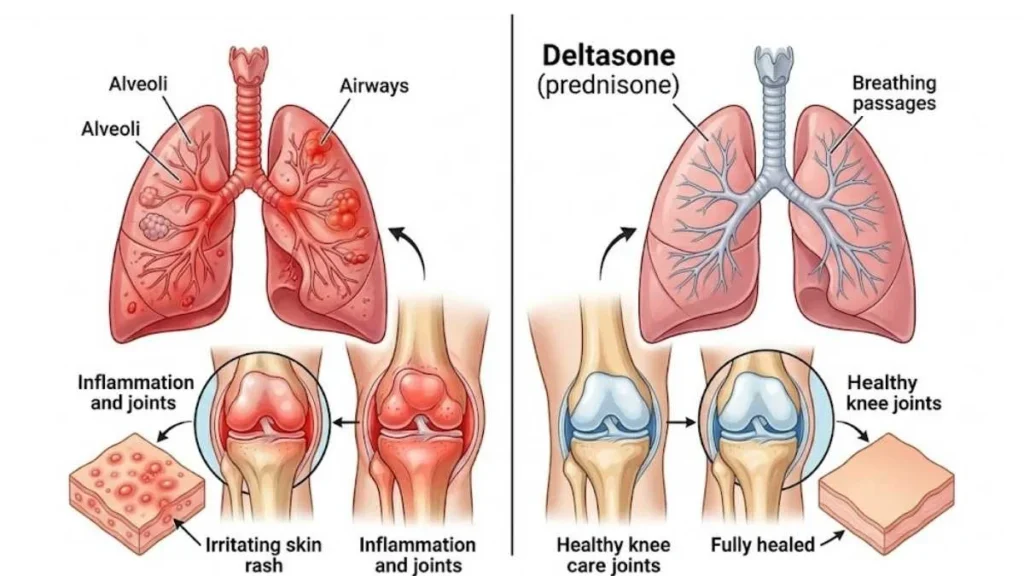
A short course can significantly improve breathing and reduce airway swelling.
Allergic Reactions
Deltasone may be prescribed for:
- Severe seasonal allergies
- Drug reactions
- Hives
- Allergic skin conditions
- Anaphylaxis recovery treatment
In these situations, prednisone helps reduce the body’s excessive immune response.
Autoimmune Disorders
Many autoimmune diseases involve the immune system attacking healthy tissues. Deltasone may help control:
- Rheumatoid arthritis
- Lupus
- Vasculitis
- Autoimmune hepatitis
- Multiple inflammatory disorders
Skin Conditions
Dermatologists sometimes prescribe prednisone for:
- Severe eczema
- Psoriasis flares
- Contact dermatitis
- Serious skin rashes
Other Medical Uses
Deltasone may also be used for:
- Inflammatory bowel diseases
- Certain blood disorders
- Kidney diseases involving inflammation
- Organ transplant management
- Some cancer treatment protocols
How Deltasone Works
Inflammation is part of the body’s natural defense system. However, excessive inflammation can damage healthy tissues and worsen disease symptoms.
Prednisone works by:
- Reducing inflammatory chemicals
- Limiting immune cell activity
- Decreasing swelling
- Lowering allergic responses
- Preventing tissue damage caused by chronic inflammation
Many patients notice improvement within hours or days, depending on the condition being treated.
Typical Dosing and Administration
Deltasone dosing varies significantly based on the medical condition, severity of symptoms, patient age, and treatment goals.

A physician may prescribe:
- Short-term “burst” therapy for asthma or allergies
- Gradual tapering schedules
- Long-term maintenance therapy for chronic diseases
Important Administration Tips include:
- Take the medication exactly as prescribed.
- Take it with food when possible to reduce stomach irritation.
- Morning dosing is often preferred because it better aligns with natural cortisol production.
- Never stop long-term prednisone abruptly without medical guidance.
One of the most important aspects of prednisone therapy is proper tapering. When used for extended periods, the body may temporarily reduce its own cortisol production. Stopping suddenly can lead to serious withdrawal symptoms and adrenal insufficiency.
Common Side Effects
Many people tolerate short-term treatment well, but side effects can still occur.
Common short-term effects include:
- Increased appetite
- Weight gain
- Mood changes
- Difficulty sleeping
- Fluid retention
- Increased blood sugar levels
- Indigestion
A patient taking prednisone for a severe allergy flare might feel dramatically better within two days yet notice increased hunger and restlessness at night. These effects are common and usually temporary.
Long-Term Risks
The likelihood of complications generally increases with higher doses and longer treatment durations.
Potential long-term risks include:
Bone Loss
Extended corticosteroid use may contribute to osteoporosis and increased fracture risk.
Increased Infection Risk
Because prednisone suppresses immune function, the body may become more vulnerable to infections.
Blood Sugar Problems
Patients with diabetes often require closer monitoring because prednisone can elevate glucose levels.
Eye Complications
Long-term use may increase the risk of cataracts or glaucoma.
Hormonal Suppression
Chronic steroid use can affect normal adrenal gland function, making careful medical supervision essential.
Physical Changes
Some patients experience:
- Rounded facial appearance (“moon face”)
- Fat redistribution
- Muscle weakness
- Thinning skin
- Easy bruising
Who Should Use Extra Caution?
Certain individuals may require additional monitoring while taking Deltasone.
These include people with:
- Diabetes
- High blood pressure
- Osteoporosis
- Active infections
- Glaucoma
- Peptic ulcer disease
- Liver disease
- Mental health conditions
Pregnant or breastfeeding individuals should discuss risks and benefits with their healthcare provider before starting treatment.
Frequently Asked Questions
Is Deltasone the same as prednisone?
Yes. Deltasone is a brand name for the generic medication prednisone.
How quickly does Deltasone start working?
Some patients notice improvement within a few hours, while others may require several days depending on the condition being treated.
Can I drink alcohol while taking Deltasone?
Occasional alcohol consumption may be allowed for some individuals, but combining alcohol with prednisone can increase the risk of stomach irritation and other complications. Consult your healthcare provider.
Conclusion
Deltasone (prednisone) remains one of the most effective medications for controlling inflammation and managing immune-related disorders. Its ability to provide rapid symptom relief makes it invaluable for conditions ranging from severe allergies and asthma attacks to chronic autoimmune diseases.
At the same time, prednisone is a powerful medication that requires thoughtful use. Understanding potential side effects, following prescribed dosing schedules, and maintaining regular communication with healthcare providers can significantly reduce risks while maximizing benefits. For many patients, Deltasone is not simply a symptom-management tool—it can be a medication that restores function, prevents complications, and improves quality of life when used appropriately.