


Ad blocking is the practice of preventing advertisements from loading or displaying on websites, mobile apps, and other digital platforms. While the concept sounds simple, modern ad blockers do far more than remove visual clutter. Many also stop tracking scripts, block malicious advertising networks, improve page loading speed, and reduce data usage.
For millions of users, ad blocking has become less about convenience and more about privacy, security, and performance.
How Ad Blocking Works
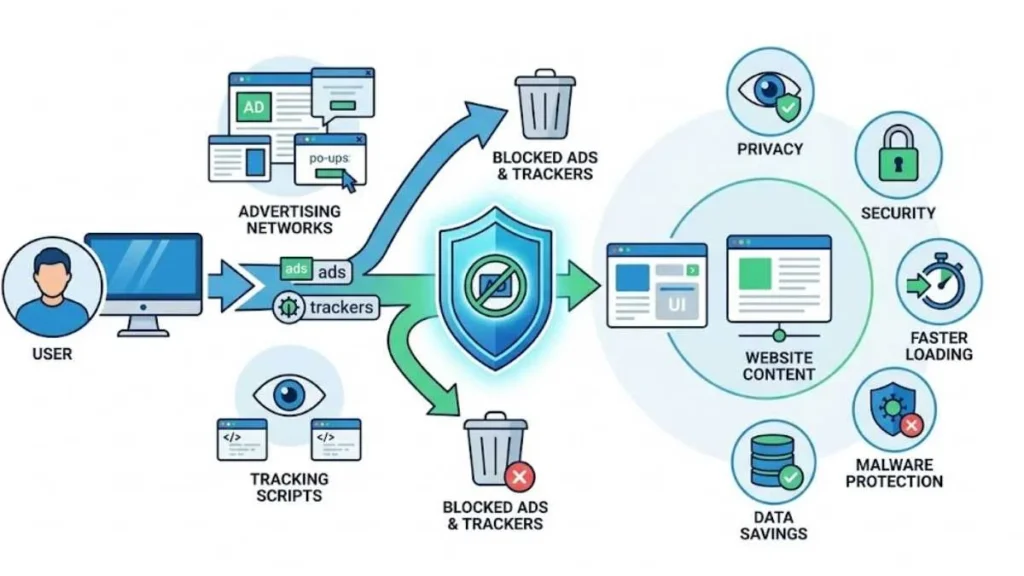
At its core, an ad blocker acts as a filter between your browser and the content being requested from a website. When a webpage loads, it often pulls resources from multiple sources. Some deliver the content you want to see, while others serve advertisements, trackers, analytics scripts, and marketing pixels.
An ad blocker compares these requests against predefined filter lists and blocks those associated with advertising or tracking. Most modern ad blockers operate through browser extensions, though some work at the device, network, or DNS level.
Why People Use Ad Blockers
Faster Browsing
Many websites load dozens of advertising assets before displaying content. Blocking those requests often results in noticeably faster page loads.
For users with slower internet connections or limited bandwidth, the difference can be substantial.
Better Privacy
Online advertising increasingly relies on user profiling and behavioral tracking.
Ad blockers frequently prevent:
- Cross-site tracking
- Third-party cookies
- Fingerprinting attempts
- Data collection by advertising networks
This reduces the amount of personal browsing information shared across the web.
Improved Security
A less discussed advantage of ad blocking is protection against malicious advertisements.
Cybercriminals occasionally exploit legitimate ad networks to distribute malware through infected advertisements. Because ad blockers prevent many ad scripts from loading, they can reduce exposure to these threats.
Reduced Distractions
Some websites prioritize ad revenue so aggressively that content becomes difficult to read.
By removing visual clutter, ad blockers can create a cleaner, more focused reading experience.
Different Types of Ad Blocking
| Type of Ad Blocking | How It Works | Key Benefits | Limitations |
| Browser Extensions | Installed directly in web browsers such as Chrome, Firefox, Edge, or Safari to filter ads and trackers. | Easy to install, highly customizable, effective for most users. | Only works within the browser where it is installed. |
| DNS-Based Ad Blocking | Blocks requests to advertising domains before a device connects to them. | Network-wide protection, reduced bandwidth usage, works across multiple devices. | Less granular control compared to browser extensions. |
| Network-Level Solutions | Uses routers or dedicated devices to filter advertising traffic across an entire network. | Protects smart TVs, gaming consoles, mobile devices, and IoT devices without individual installations. | More complex to set up and manage. |
Not all ad blockers work the same way.
The Drawbacks of Ad Blocking
While ad blocking offers clear benefits, it is not without controversy.
Impact on Publishers
Many websites depend on advertising revenue to fund content creation.
When visitors block ads, publishers may earn less income despite continuing to provide free content.
This creates an ongoing tension between user experience and website sustainability.
Broken Website Functionality
Some sites integrate advertising systems deeply into their infrastructure.
As a result, aggressive ad blocking can occasionally cause:
- Missing images
- Broken video players
- Login issues
- Display problems
Most modern blockers allow users to whitelist trusted websites when necessary.
Anti-Ad-Block Systems
An increasing number of publishers detect ad blockers and restrict access until users disable them or subscribe to a premium plan.
This cat-and-mouse dynamic continues to evolve across the web.
Choosing the Right Ad Blocker
The best ad blocker depends on your priorities. If privacy is your primary concern, look for solutions that block both advertisements and tracking technologies. If performance matters most, prioritize lightweight tools that minimize browser resource usage.

Ironically, some low-quality ad blockers collect user data themselves, defeating one of the primary reasons people install them.
Frequently Asked Questions
Is ad blocking legal?
In most countries, using ad-blocking software is legal. Users generally have the right to control what content loads on their own devices.
Does ad blocking improve internet speed?
Often, yes. By preventing advertising assets and tracking scripts from loading, webpages may load faster and consume less bandwidth.
Can ad blockers stop online tracking?
Many can significantly reduce tracking activity, though no solution guarantees complete anonymity online.
Conclusion
Ad blocking has evolved from a simple convenience tool into a broader solution for privacy, security, and browsing efficiency. By filtering advertisements, trackers, and potentially harmful scripts, ad blockers help users create a faster and more controlled online experience. However, responsible use is important. Understanding the impact on content creators and choosing trustworthy tools can help strike a balance between protecting your digital experience and supporting the websites that provide valuable information. As online advertising continues to change, ad blocking will remain a key part of how many people navigate the modern web.