


A basement flood is the accumulation of unwanted water in the lowest level of a building. While it may begin as a few inches of water after a storm, the consequences can be surprisingly severe. Flooring, drywall, insulation, electrical systems, furniture, and stored belongings can all be damaged within hours. If moisture remains trapped, mold can begin developing in as little as 24 to 48 hours.
Many homeowners view basement flooding as a rare disaster, but contractors and restoration professionals often see it as a recurring issue linked to drainage problems, aging infrastructure, and overlooked maintenance. Understanding why floods happen and how to respond quickly can dramatically reduce both damage and repair costs.
Common Causes of Basement Flooding
Intense storms can overwhelm drainage systems, causing water to pool around a home’s foundation. If the soil becomes saturated, hydrostatic pressure builds against basement walls and floors, forcing water through cracks and weak points.
In older neighborhoods, public sewer systems can become overloaded during periods of heavy rain. When this happens, wastewater may flow backward into residential basements through floor drains or plumbing fixtures.
Even small cracks can become entry points for water. Over time, foundation settling, soil movement, and freeze-thaw cycles can enlarge these openings, allowing moisture to seep inside. Not every basement flood originates outside. Burst pipes, leaking water heaters, malfunctioning washing machines, and broken plumbing connections can release hundreds of gallons of water into a basement within a short period.
What to Do Immediately After a Basement Flood
The first few hours often determine how extensive the damage becomes.
1. Prioritize Safety
Never enter a flooded basement if there is any possibility that electrical outlets, appliances, or wiring are submerged. Shut off power to the affected area if it can be done safely.
If floodwater appears contaminated by sewage, avoid direct contact and wear protective equipment.
2. Stop the Water Source
If the flooding originates from a burst pipe or appliance leak, turn off the main water supply immediately. For external flooding, focus on preventing additional water from entering if conditions allow.
3. Remove Standing Water
The faster water is removed, the better.
Options include:
- Wet vacuums
- Submersible pumps
- Professional water extraction services
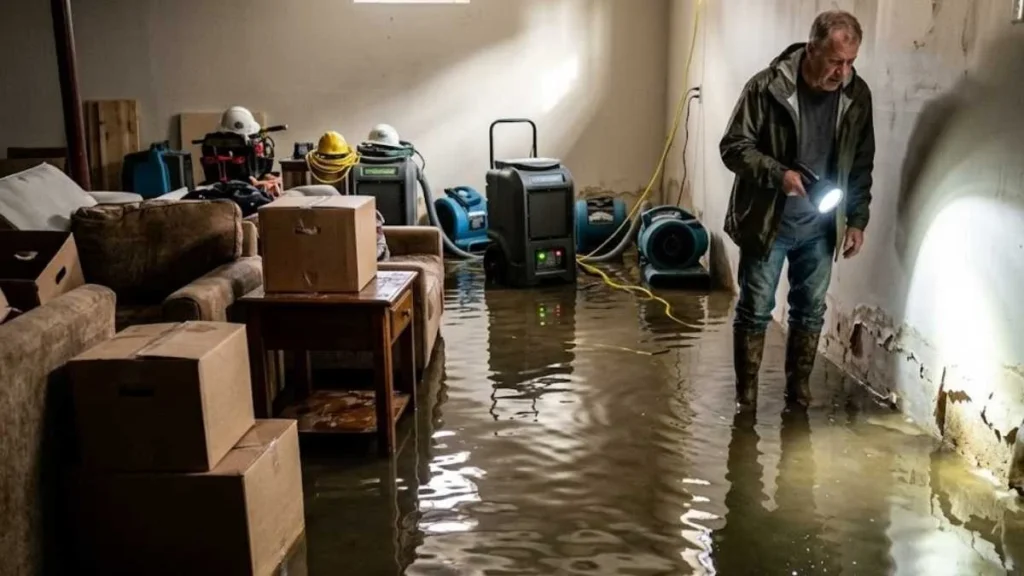
Large-scale flooding often requires commercial-grade equipment capable of removing thousands of gallons quickly.
4. Dry the Area Thoroughly
Removing visible water is only part of the process. Moisture trapped behind walls, under flooring, and inside insulation can create ideal mold conditions.
Use:
- Industrial fans
- Dehumidifiers
- Ventilation systems
Professional restoration companies frequently use moisture meters to identify hidden damp areas.
5. Document Everything
Take photographs and videos before beginning extensive cleanup. This documentation can be invaluable when filing insurance claims.
The Hidden Risks of Ignoring Basement Water Damage
Moisture creates an environment where mold can thrive. Once established, mold may spread behind drywall, beneath carpeting, and inside insulation, making remediation significantly more difficult.
Over time, persistent moisture may compromise the structural integrity of the building. Visible water damage, mold history, and recurring flooding issues can negatively impact resale value and complicate future home inspections.
Does Home Insurance Cover Basement Floods?
Coverage depends largely on the source of the water. Many homeowners are surprised to learn that standard policies often do not cover flooding caused by rising groundwater or external flood events. Coverage may apply to:
- Burst pipes
- Sudden plumbing failures
- Certain appliance leaks
Additional endorsements or separate flood insurance policies may be required for protection against natural flooding and sewer backups. Because policy language varies significantly, reviewing coverage before an emergency occurs is one of the smartest preventive measures a homeowner can take.
How to Prevent Future Basement Flooding
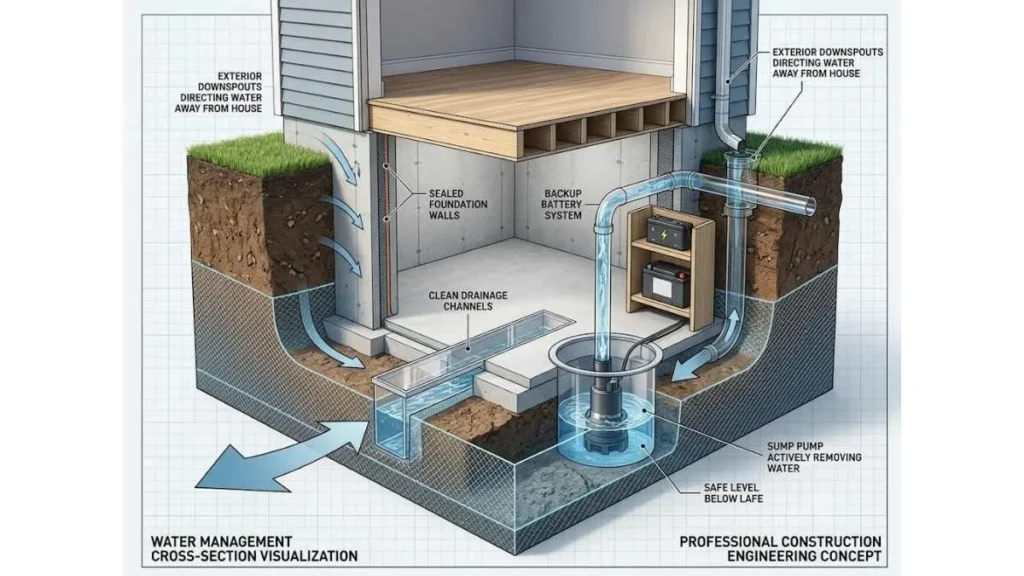
While no solution is completely foolproof, several strategies can dramatically reduce risk. Ensure gutters remain free of debris and direct water several feet away from the foundation. The ground surrounding the home should slope away from the foundation rather than toward it. Improper grading is a surprisingly common contributor to basement water problems.
Battery-powered or water-powered backup systems provide protection when electrical outages disable the primary pump. Small cracks should be inspected and repaired before they become larger water-entry points. Homes vulnerable to sewer backups may benefit from a backwater valve that prevents wastewater from flowing backward into the building.
Frequently Asked Questions
Can mold grow after a small basement flood?
Yes. Even minor flooding can leave enough moisture behind for mold to develop if the area is not thoroughly dried.
What is the most common cause of basement flooding?
Heavy rainfall combined with poor drainage is among the most frequent causes, though plumbing failures and sewer backups are also common.
Should I clean a sewage backup myself?
Generally, no. Sewage-contaminated water presents health risks and often requires specialized cleanup and disinfection procedures.
Conclusion
A basement flood is one of the most disruptive problems a property owner can face. Whether caused by severe weather, a failed sump pump, a sewer backup, or a burst pipe, the effects can extend far beyond visible water damage. Fast action, proper drying, and careful assessment are essential to protecting the building and preventing mold and structural deterioration.
The most effective approach, however, is prevention. Regular maintenance, proper drainage, foundation inspections, and backup systems can dramatically reduce the likelihood of future flooding. For homeowners, a few preventive measures today can mean avoiding thousands of dollars in repairs tomorrow.