

Motiyabind, medically known as cataract, is a condition in which the natural lens of the eye becomes cloudy. The lens plays a key role in focusing light onto the retina. When it loses transparency, vision becomes blurred, faded, and less sharp. Over time, colours may appear dull and glare from lights becomes uncomfortable.
Cataract usually develops slowly. In the early stage, many patients adapt to the changes without realising the extent of vision loss. As the cloudiness increases, routine activities such as reading, driving, or working on screens become difficult. This is the stage when most people start looking for cataract treatment.
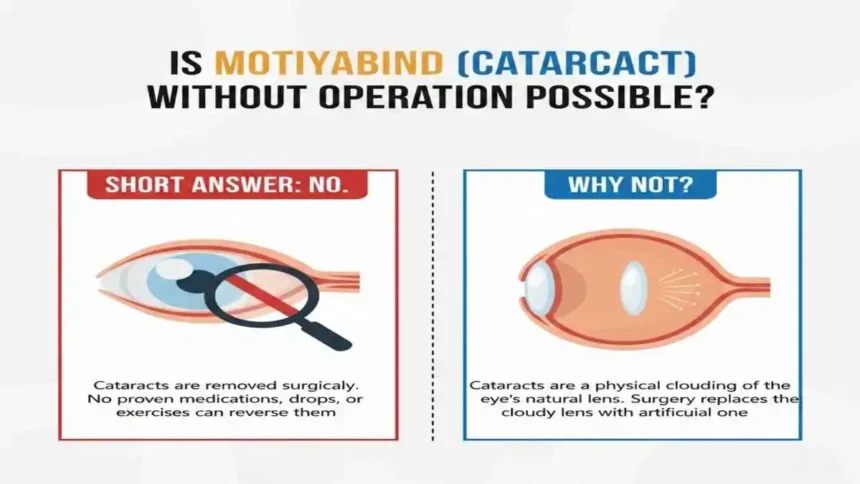
It is important to understand that cataract treatment ultimately means removing the cloudy lens. Since the lens cannot repair itself, surgery is the endpoint of cataract treatment.
Cataract Surgery and Why It Is Necessary
Cataract surgery is performed to remove the cloudy natural lens and replace it with a clear artificial intraocular lens. This artificial lens restores the normal passage of light inside the eye and improves vision.
The reason surgery is required is simple. Cataract is a physical change in the structure of the lens. Medicines and eye drops cannot reverse this change. Once the lens proteins become opaque, the clarity cannot return on its own. There is currently no medically approved cataract treatment without operation. Surgery is not advised out of convenience. It is recommended because it is the only method that addresses the root cause of cataract. Modern cataract surgery is a controlled and precise procedure. It directly removes the source of vision blockage. That is why cataract surgery remains the only effective and permanent treatment option for motiyabind. Motiyabind treatment without operation is not a possibility.
Other Approaches That Support Vision
Many people search for motiyabind treatment without operation hoping for a way to avoid surgery. While cataract cannot be reversed without removing the cloudy lens, certain practical measures can help maintain comfort and functional vision for some time. These approaches manage symptoms. They do not cure cataract.
Updated Spectacle Prescription
In the early stage of cataract, changes in lens clarity can alter the eye’s focusing power. This may cause frequent changes in spectacle number. Updating glasses can temporarily improve sharpness, especially for distance vision. However, as the cataract becomes denser, even strong prescriptions fail to provide clarity. This is because the problem is no longer just refractive error. It is a physical obstruction of light inside the eye. Glasses are supportive, not curative.
Use of Magnifiers
In some cases, patients wish to delay surgery for personal or medical reasons. Performing basic tasks in such cases can become troublesome. If you are experiencing difficulty, you can use low vision aids for specific tasks. Keep a handheld magnifier around you. If you cannot read or see any detail, you can use it to reduce difficulty. Also, switch to larger font sizes for your mobile. This can make using your device more convenient temporarily.
Improved Lighting Environment
A cataract reduces the amount of light reaching the retina. Therefore, when people work in dim environments, they have a tough time seeing clearly. This can make it difficult to focus and strain your eyes. That is why it is always recommended to work in bright indoor lighting. It can reduce strain and improve clarity during tasks, like reading or cooking. Additionally, avoid working in harsh yellow light. A white light with proper diffusion will be more beneficial.
However, you have to be careful with the positioning of the light source. If you place it right in front of you, you may see a glare. So, position it behind the shoulder. Better lighting compensates for reduced clarity. However, as the cataract continues to mature, this trick will not work for very long.
Glare Reduction Strategies
Glare sensitivity is common among people with cataracts. Wherever they are in bright light, they face a lot of discomfort. For instance, bright sunlight outdoors will make you squint every time you go out during the day. Similarly, driving becomes impossible at night when cars come from the opposite side with headlights on. These issues can be tackled by using anti-glare glasses. Modern matte screen protectors are also available that can reduce light scatter and improve comfort outdoors. Also, avoid driving at night because glare becomes excessive at that time.
Control Diabetes
Uncontrolled diabetes can accelerate cataract formation due to metabolic changes inside the lens. Maintaining stable blood sugar levels reduces additional stress on the eye. Similarly, managing blood pressure is important for your ocular health. Eat healthy always and choose foods that improve eye health. These strategies can slow down the progression of your cataract. However, they will not fix it.
Avoiding Smoking and Excessive Steroid Use
Smoking has several harmful effects on health. One of them is damaging your eye lens. It increases oxidative stress in your eyes. Oxidative stress accelerates the clouding of lens proteins and increases the risk of cataract progression. So, if you have a cataract, quit smoking immediately. It is an important step towards supporting your overall eye health. However, stopping smoking cannot reverse cataract once it has already developed.
Careful Use of Steroid Medications
Long-term or unsupervised use of steroid medicines is a known risk factor for cataract. Steroids may be taken as tablets, inhalers, skin creams, or eye drops. Using steroids only when medically necessary and under proper supervision helps reduce additional lens damage.
Regular Eye Monitoring
If your doctor recommends undergoing surgery soon, you should not ignore it. However, if surgery is postponed for any reason, periodic eye examinations are essential. You cannot completely ignore the condition. Go for timely eye checkups. Monitoring will help you and your doctor keep track of cataract progression. However, the longer you delay cataract surgery, the worse it will get. Cataract treatment without operation is not possible.
Conclusion
Motiyabind is a common eye condition, but it cannot be treated without surgery. Cataract treatment without operation is not medically possible, because the cloudy lens cannot become clear again through non-surgical methods. Cataract surgery removes the root cause of vision loss and remains the only effective treatment. Supportive approaches can help maintain comfort for a limited time, but they do not replace surgery. Understanding this difference helps patients make informed decisions and seek timely treatment for long-term vision clarity.