


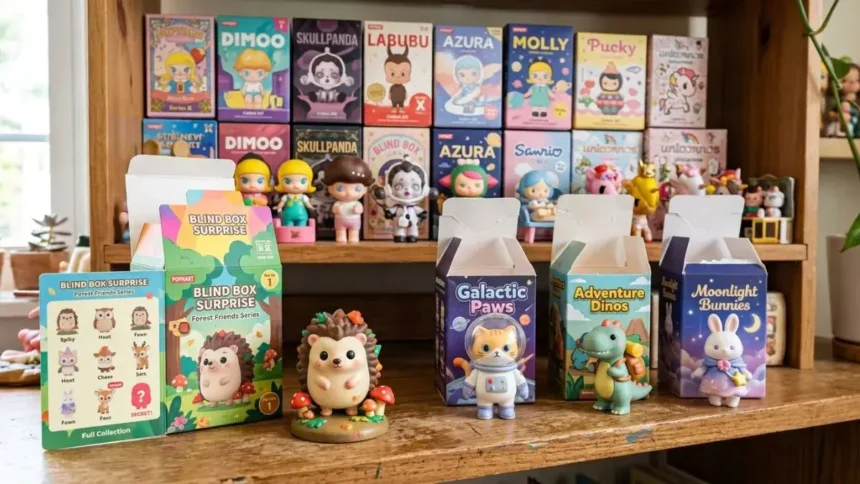
A blindbox is sealed packaging that conceals a collectible from a defined series. The manufacturer generally displays the possible designs on the packaging or product listing, but buyers cannot select the exact figure inside a standard sealed box.
Collections may feature designer toys, anime characters, miniature food, animal figures, keychains, and decorative accessories. POP MART is a prominent example of a brand using this format for character-based art toys, including collections with standard and secret figures.
The distinction is not simply that the contents are hidden. A conventional toy purchase lets you compare a known item against its price; a blindbox requires you to evaluate a range of possible outcomes. That makes the series lineup, distribution rules, and your preferences more relevant than the packaging alone.
How Does a Blindbox Work?
Manufacturers create a series of collectible designs and distribute them into individual packages according to the rules for that release. A retailer sells a sealed box, and the buyer discovers which design it contains after opening it.
Some collections are sold as individual boxes, while others offer a complete case or full set. Certain series may guarantee the regular designs across a case, but that guarantee must be verified for the specific release; it should never be assumed from the phrase “full box.”
Before purchasing, establish three things: whether the contents are genuinely random, whether the seller offers a guaranteed assortment, and whether the product is sealed or has already been identified. These details determine what you are paying for.
Secret Figures and Blindbox Odds Explained
A secret figure, sometimes called a chase figure, is a special design that is less common than the regular characters in some collections. It may have a different color scheme, costume, finish, or sculpt. However, a figure’s rarity does not automatically make it desirable or valuable to every collector.
The most useful distinction is between a published pull rate and a guaranteed case distribution. A pull rate describes the stated chance of finding a figure in a purchase, while a case rule describes how items are distributed across a larger package of boxes. The two are not interchangeable.
If the manufacturer instead guarantees a specific case composition, the independent-draw model may not apply. Always read the exact series rules before using published odds to estimate how much a complete collection will cost.
Blindbox vs. Blind Bag vs. Mystery Box
These terms overlap with retail listings, but the buying experience can differ substantially.
| Feature | Blindbox | Blind bag | Mystery box |
| Typical contents | Figures from a defined series | Small toys or accessories | Mixed or curated products |
| Packaging | Usually, a sealed box | Usually, an opaque pouch | Box, parcel, or assorted packaging |
| Collection structure | Often a published lineup | Often a published lineup | May have no fixed lineup |
| Main uncertainty | Which design you receive | Which item you receive | Which products the seller includes |
The practical difference is predictability. A blindbox buyer can usually inspect the possible designs before purchasing, while a mystery-box buyer may not know the complete range of possible contents. Neither packaging type guarantees better value, higher quality, or greater rarity.
How to Decide Whether a Blindbox Is Worth the Price
The best purchasing decision depends on whether you would be happy with several possible designs or want only one character.
Imagine a series with six standard figures priced at $12 each. You want one specific character, but each box is equally likely to contain any of the six designs, and every opening is independent.
- Buying one box costs $12, with a 1-in-6 chance of receiving your preferred figure.
- Buying six boxes’ costs $72, but does not guarantee the desired figure because duplicates are possible.
- Buying the specific character directly for $25 costs more than one random box but eliminates the uncertainty if the seller is reliable.
If all six designs are equally likely, the expected number of boxes needed to obtain one character is six. At $12 per box, that means an expected spending of $72, not a guaranteed maximum.
This example shows why individual purchases can be more economical when you have a clear favorite. Random boxes make more sense when you genuinely enjoy discovering different characters rather than treating every unwanted result as a failed purchase.
How to Spot Authentic Blindboxes
Counterfeit collectibles can imitate recognizable characters and packaging, so appearance alone is not sufficient proof of authenticity. Use a verification process before spending money on a sought-after release.
- Identify the exact series. Compare the collection name, character lineup, product images, and release details with the manufacturer’s official website.
- Check the seller’s status. Prefer the brand’s official store or a retailer whose authorization can be independently verified.
- Examine product details. Look for inconsistencies in printing, logos, materials, accessories, and product descriptions. These are warning signs, not definitive tests.
- Question about unusually low prices. A discount may be legitimate, but a price far below comparable listings deserves further investigation.
- Review the return policy. Confirm how the seller handles counterfeit goods, damaged products, and missing items before opening the package.
For valuable purchases, retain the receipt, order confirmation, and packaging. If authenticity is disputed, these records can help support a claim.
The Hidden Cost of Chasing Rare Figures
Blindbox spending can increase because each purchase creates another opportunity to obtain a desired character. A buyer who misses a secret figure may feel that another box will finally deliver it, even though previous unsuccessful purchases do not necessarily improve the odds of the next independent draw.
Research published in the Journal of Retailing and Consumer Services examined uncertainty marketing in blindbox collectibles and described a purchasing cycle in which excitement, uncertainty, and repeated buying can reinforce one another. This does not mean every collector develops a spending problem; it does explain why setting a limit before opening boxes is more effective than deciding after a disappointing result.
A practical rule is to decide your total budget in advance and include shipping, import charges, and any resale fees. When you reach that limit, consider trading duplicates or buying the missing figure directly instead of continuing to purchase random boxes.
FAQs
1. Can you choose the figure inside a blindbox?
Usually not when buying a standard sealed box. Some platforms provide hints, while selected retailers sell individually identified figures or guaranteed complete sets.
2. Does buying a full case guarantee a secret figure?
Not necessarily. Case composition varies by series, and a complete assortment of regular figures does not automatically include a secret design. Check the manufacturer’s stated rules.
3. Are rare blindbox figures good investments?
Not reliably. Resale value depends on demand, condition, authenticity, availability, and completed-sale prices. A rare figure can still lose value if collector interest declines.
4. What is the cheapest way to complete a blindbox collection?
Check for a guaranteed full set first. Otherwise, compare the cost of additional random boxes with the price of buying missing figures individually or trading duplicates.
Final Thoughts
A blindbox is best understood as a collectible purchase with an uncertain outcome, not as a guaranteed route to a rare or valuable figure. Before buying, examine the series rules, distinguish pull rates from case guarantees, and compare the cost of random purchases with the price of your preferred character.
The most satisfying collection is not necessarily the one with the rarest figure. It is the one you enjoy enough that the ordinary pulls, occasional duplicates, and total spending still make sense to you.